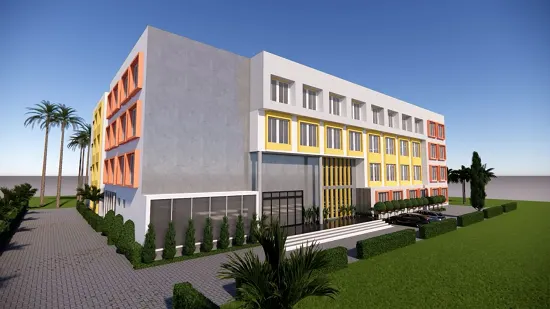
More Mangalore parents are actively researching residential schools in Mangalore today than a decade ago — a shift driven partly by demanding work schedules, partly by the appeal of structured, distraction-free learning environments for children preparing for competitive exams. At the same time, day schools remain the default choice for most families, particularly for younger children who benefit from staying close to home.
The core difference is simple: a residential school (or boarding school) is where students live, study, and take part in daily activities on campus under structured supervision. A day school is where students attend classes and return home each evening. Neither model is universally “better” — the right choice depends on the child’s age, personality, academic goals, and the family’s circumstances. This guide compares both models directly, covering the practical differences in daily structure, academic support, cost, and personal development, so parents evaluating boarding schools in Mangalore can make a well-informed decision.
What Is a Residential School?
A residential school is an educational institution where students live on campus in hostel accommodation for the duration of the academic term, rather than returning home each day. Students eat, study, sleep, and take part in sports and extracurricular activities within the same campus, under the supervision of wardens and teaching staff around the clock.
A typical day at a residential school follows a structured routine: morning wake-up and study time before classes, the academic day itself, supervised sports or activity periods in the afternoon, evening prep or homework sessions with subject teachers available for doubts, and a fixed lights-out time. This structure — repeated daily — is what residential education is built around, and it is also what most consistently builds independence, time discipline, and self-reliance in students who might otherwise rely heavily on parents managing their schedule at home.
For families in and around Dakshina Kannada, a residential school in Mangalore that combines full CBSE academics with genuine hostel infrastructure — rather than a day school offering a handful of hostel seats as an add-on — gives a fundamentally different daily experience for the child, one built around 24/7 structure rather than school-hours-only supervision.
What Is a Day School?
A day school follows the traditional model most Indian families are familiar with: students attend classes during fixed school hours and return home every evening. Academic instruction happens at school, but homework, revision, and after-school activities happen at home, under parental involvement.
This model keeps the child within the family’s daily rhythm — meals, routines, and parental oversight continue exactly as they always have, just with school hours built into the middle of the day. For many families, particularly with younger children, this continuity matters more than any specific academic advantage a residential programme might offer.
A residential school vs day school comparison ultimately comes down to how much structure the family wants the school itself to provide, versus how much the family prefers to manage directly at home. Whether a day school suits a specific child depends heavily on the child’s temperament, the parents’ availability to support after-school learning, and how far the school is from home.
Residential School vs Day School : Key Differences
| Factor | Residential School | Day School |
| Living Facility | Hostel campus | Home |
| Study Support | Extended learning hours | School hours only |
| Discipline | Structured routine | Depends on home routine |
| Activities | Daily sports & activities | Limited after-school activities |
| Independence | High | Moderate |
| Supervision | 24/7 supervision | School hours only |
No single row in this table determines the right choice on its own — a family weighing a residential school vs day school comparison should read these factors together against their specific child’s needs, not pick based on one column in isolation.
Benefits of Residential Schools
Residential education supports holistic development precisely because it extends learning beyond the classroom into every part of a student’s day — structured study time, supervised sports, communal meals, and peer living all contribute to growth that a six-hour school day alone cannot replicate.
- Academic improvement through structured study schedules: fixed daily study hours with teacher availability for doubts build consistency that unsupervised home study often lacks
- Confidence, leadership, and responsibility: managing one’s own schedule, belongings, and relationships away from direct parental oversight builds these qualities faster than a day-school routine typically allows
- Sports, extracurricular activities, and life skills: daily access to sports facilities and activity periods, rather than occasional after-school sessions, builds skills and interests more consistently
This combination is exactly why parents choose the best residential schools in Mangalore specifically for children preparing for competitive exams or needing a more structured environment than home life can currently provide.
Benefits of Day Schools
- Staying with family: daily emotional support and continuity of home life, particularly valuable for younger children
- Daily parental support and emotional comfort: parents can directly observe and respond to a child’s day-to-day challenges rather than relying on periodic hostel updates
- Lower separation challenges for younger children: children under 9–10 years old generally adjust to a new environment more easily when they return to a familiar home each evening
- Flexibility after school hours: families can schedule tutoring, hobbies, or activities outside school hours according to their own preferences, rather than the hostel’s fixed routine
Pros and Cons of Residential Schools
Advantages
- Disciplined lifestyle and time management built into daily routine
- Better academic monitoring through structured study hours and teacher availability
- Access to full campus facilities — sports, labs, libraries — beyond school hours
- Social development through continuous peer interaction and shared living
- Stronger preparation for future independent living — college, hostels, or working away from home
Challenges
- Homesickness and an adjustment period, particularly in the first few weeks
- Choosing a truly safe, well-run school matters more here than for any other decision in this comparison
- Parental involvement is still required — through regular communication and campus visits, not a hands-off approach
- Financial considerations, since residential fees typically run higher than day school fees
Pros and Cons of Day Schools
- Advantage — family-based learning: daily parental involvement in a child’s academic and emotional life
- Consideration — transportation and daily commute: travel time can meaningfully reduce a child’s available study and rest hours, particularly for schools further from home
- Limitation — extracurricular exposure: activities are typically limited to school hours or occasional after-school sessions, rather than daily structured programmes
- Consideration — dependence on home study environment: a child’s academic consistency depends heavily on how well-structured their home study routine is, which varies significantly between families
Residential School vs Day School Fees
Boarding school fees in Mangalore are structured differently from day school fees, since residential fees bundle several costs that day schools charge separately or not at all.
| School Type | Typical Annual Fee Range (Indicative) |
| Government-aided day schools | Under ₹5,000 |
| Private day CBSE schools in Mangalore | ₹30,000 – ₹60,000 |
| Residential/boarding CBSE schools in Dakshina Kannada | ₹1.5 lakh – ₹2.5 lakh, inclusive of hostel, meals, and school fees |
*Indicative ranges only — always confirm the current fee structure directly with the school, since fees vary by grade, facilities included, and academic year.
The higher cost of residential education reflects what’s actually included: hostel accommodation, all meals, sports and activity facilities, 24/7 supervision, and often additional academic support hours that a day school simply doesn’t provide as part of its standard fee. Parents comparing top 10 boarding school in Mangalore with fees options should look at what’s bundled into the quoted fee, not just the headline number, since two schools quoting similar annual fees can include very different levels of facility and support.
Top Residential Schools in Mangalore (2026 Guide)
Rather than a simple ranked list, the schools below are presented with what actually distinguishes each one — curriculum, residential facilities, and location — so parents can compare based on what matters for their specific child.
Bright Horizon International School — Venur, Belathangady Taluk
Bright Horizon is the only CBSE co-educational residential school in Belathangady Taluk, Dakshina Kannada, offering a fully residential campus for Class 4–10 with separate boys’ and girls’ hostels, 24/7 warden support, and CCTV monitoring. The school combines the full CBSE curriculum with early competitive exam coaching — NEET, IIT-JEE, Civil Services, and CA Foundation — starting from Class 5, alongside smart classrooms, dedicated Physics, Chemistry, Biology, and Computer Science labs, and a well-rounded approach that integrates coding, AI, sports, and cultural arts into the daily routine.
Sharada Vidyanikethana Public School — Thalapady
Located roughly 16–17 km from Mangalore city on NH 66, Sharada Vidyanikethana is a CBSE-affiliated residential school with separate hostel wings for boys and girls, set on a large green campus. It is a well-established option for families along the Mangalore–Kerala coastal corridor seeking boarding facilities relatively close to the city.
St. Aloysius Gonzaga School — Kodialbail
A long-established Jesuit institution in central Mangalore with over 140 years of legacy under the wider St. Aloysius tradition. St. Aloysius Gonzaga is primarily a day school, though it offers a limited number of hostel seats for select classes — families specifically prioritising a fully residential experience should confirm current hostel availability directly with the school.
Canara High School — Kodialbail / Dongarakere
Backed by one of Karnataka’s oldest educational trusts, Canara High School’s CBSE wing is known for orderly academics, experienced faculty, and steady board results. It is generally regarded as a well-established day school option rather than a primarily residential one — families should verify current hostel or boarding facilities directly with the school if that is a requirement.
Beyond these, several other institutions across Dakshina Kannada offer boarding options with varying facilities — always verify current hostel infrastructure, safety measures, and fee structures directly with any school before shortlisting it.
How to Choose the Best Residential School in Mangalore?
A structured evaluation — rather than relying on reputation alone — helps parents shortlist confidently. Key factors to evaluate:
- CBSE affiliation — confirm current, valid affiliation status directly with the board or school
- Experienced teachers — ask specifically about faculty tenure and subject expertise, not just qualifications on paper
- Hostel safety — CCTV coverage, warden-to-student ratio, and clear emergency protocols
- Medical facilities — a resident nurse and a doctor with a defined visiting schedule, not just a first-aid kit
- Food quality — ask about the weekly menu, dietary accommodations, and hygiene standards
- Sports facilities — the range of sports actually offered daily, not just what’s listed in the brochure
- Academic support — structured study hours with subject teachers actually available for doubts, not just supervised silence
Who Should Choose a Residential School?
- Students preparing for competitive exams (NEET, JEE, and similar) who benefit from a structured, distraction-free study environment
- Children who thrive with clear routine and defined expectations, rather than open-ended flexibility
- Students who need to build independence and self-management skills before college or further study away from home
- Families where both parents work demanding schedules that limit consistent after-school academic support at home
- Students who respond well to peer-driven motivation and communal living environments
Who Should Choose a Day School?
- Younger children, particularly those under 9–10 years old, who benefit from daily continuity with family
- Students whose parents can provide consistent, structured support with homework and study at home
- Children with specific medical or emotional needs requiring close daily parental oversight
- Families who live close to a strong day school and prefer to manage the child’s schedule directly
- Students who are highly self-motivated but still benefit from being home each evening
Frequently Asked Questions
What is the main difference between a residential school and a day school?
A residential school has students living on campus in hostel accommodation with round-the-clock supervision, while a day school has students attending classes during fixed hours and returning home each evening. The core difference is the level of structure and supervision built into the child’s entire day, not just the school hours.
How much does a residential school cost in Mangalore?
Residential or boarding CBSE schools in the Dakshina Kannada district generally range from ₹1.5 lakh to ₹2.5 lakh per year, inclusive of hostel accommodation, meals, and school fees. This is meaningfully higher than private day CBSE schools, which typically range from ₹30,000 to ₹60,000 per year — but the residential fee bundles costs (accommodation, meals, 24/7 supervision) that a day school fee does not include. Always confirm current fees directly with the specific school.
At what age should a child start at a residential school?
Most residential schools accept students from Class 4 or 5 onward, and many educators consider age 9–10 a practical starting point — old enough to adjust to independent living, young enough to build long-term routine and discipline benefits. Younger children generally adjust better to day schools first.
Is a residential school better for academic performance than a day school?
Not universally — it depends on the child. Residential schools offer more structured, supervised study hours, which benefits students who struggle with self-directed study at home. But a day school with strong parental involvement in after-school learning can produce equally strong academic outcomes for a different type of student.
How do I know if a residential school is safe for my child?
Verify CCTV coverage across the hostel and campus, ask directly about warden-to-student ratios and background verification for staff, confirm the medical facility’s resident nurse and doctor visiting schedule, and ask for parent references you can contact directly rather than relying only on the school’s own materials.
Can a child switch from a day school to a residential school later?
Yes, many families make this transition, commonly around Class 6–8 when a child is preparing for board exams or competitive exam foundations. The adjustment period is usually shorter for children who already have reasonably independent study habits from their day school years.
Choosing What’s Right for Your Child
The residential school vs day school decision doesn’t have a universally correct answer — it depends on your child’s age, temperament, academic goals, and your family’s daily circumstances. Residential schools offer structure, independence, and immersive academic support; day schools offer daily family continuity and direct parental involvement. Both can produce excellent outcomes when matched to the right child.
For families exploring quality residential education in Dakshina Kannada, visiting the campus, meeting faculty, and speaking with current parents remains the most reliable way to judge whether a specific residential school actually fits your child’s needs — more reliable than any brochure or ranking list.
| Explore Bright Horizon International School If a structured, residential CBSE environment with early competitive exam support sounds right for your child, we welcome you to visit our Venur campus and see the hostel, classrooms, and facilities in person before deciding. 🌐 Plan your campus visit and admission enquiry |
| Written by Chaithra SR Sr. SEO Executive, OneCity Technologies Chaithra SR is an SEO Executive at OneCity Technologies, Bangalore, with 5.5 years in digital marketing and 2 years of dedicated education sector experience. She has worked on SEO and digital visibility campaigns for PU colleges and educational institutions across coastal Karnataka, including Excel PU College, Bright Horizon, and SVG. She holds a BE in Computer Science. LinkedIn: https://www.linkedin.com/in/chaithra-sr-4133b0217/ |
| Reviewed by L K Monu Borkala Chief Strategist, OneCity Technologies L K Monu Borkala is a digital marketing strategist with 20+ years of SEO experience and over 650 client campaigns across India and UAE. As a founding member of OneCity Technologies, Bangalore, he oversees content strategy, editorial compliance, and SEO frameworks across education, business services, and digital marketing verticals. LinkedIn: https://www.linkedin.com/in/monuborkala/ |