Part of our guide to CBSE residential and hostel schools in Mangalore.
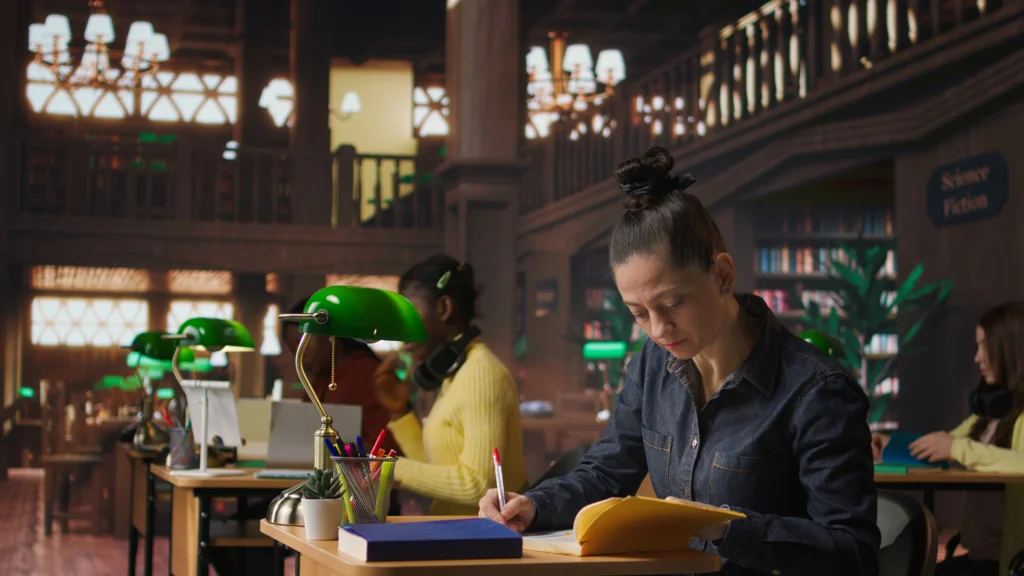
CBSE residential schools in Dakshina Kannada combine the structured, nationally recognised Central Board of Secondary Education curriculum with a full-time boarding environment — creating the conditions for consistent study habits, focused exam preparation, and personal development that classroom hours alone cannot build. Schools like Bright Horizon International School in Venur offer integrated NEET and IIT JEE coaching from Class 5, supported by experienced faculty and modern facilities.
For families across coastal Karnataka and beyond, the choice of a residential school is driven by a specific recognition: that academic performance is not determined by classroom instruction alone. It is shaped by what happens after school hours — whether the child has quiet, supervised study time; whether gaps are caught early by a teacher who knows the student; whether the environment encourages discipline or allows distraction.
The demand for CBSE boarding schools in Karnataka has grown steadily as families increasingly want a combination of national curriculum quality, competitive exam preparation, and the kind of structured residential environment that produces genuine academic outcomes — not just attendance. Dakshina Kannada, with its strong educational culture, safe surroundings, and proximity to Mangalore, has become one of the region’s most sought-after destinations for residential school education.
This article walks through the specific mechanisms by which CBSE residential schools in Dakshina Kannada improve academic performance — from daily schedule structure and faculty quality to competitive peer environments, infrastructure, and competitive exam coaching.
Structured Academic Environment Enhances Learning and Discipline
One of the most direct differences between a day school and a residential school is time control. A student commuting to a day school loses 1–2 hours daily to travel, spends unstructured afternoon hours managing domestic distractions, and often completes homework without supervision or consistent pace.
A residential school with CBSE curriculum replaces this with a planned daily schedule that allocates specific hours to classroom instruction, supervised self-study, sports, and rest. There is no commuting time to reclaim. There is no negotiation over screen time. Every hour between wake-up and lights-out is accounted for.
Daily Factor | CBSE Residential School | Day School |
Commute time | Zero — on campus | 60-120 mins/day lost |
Study hours | 3-4 hrs supervised daily | Variable, unsupervised |
Doubt-clearing access | On-campus, same evening | Next-day class only |
Gadget distraction | Managed — restricted access | High — unmanaged home use |
Peer study environment | Consistent, competitive | Isolated or informal |
Teacher observation | Daily — academic + personal | Classroom hours only |
Competitive exam prep | Integrated from early years | Separate coaching needed |
Comparison reflects general academic environment differences. Individual results depend on school quality, faculty, and student factors.
Academic discipline — the habit of sitting down to study consistently, at the same time, with the same quality of focus — is a trained behaviour, not a natural one for most children. The fixed schedules of residential schools train this behaviour over months and years. By the time a Bright Horizon student in Venur reaches Class 8 or 9, the study routine is automatic — which is precisely the right time for board and competitive exam preparation to begin in earnest.
Supervised study hours also serve a corrective function. When a student misunderstands a concept in the afternoon session, a residential school’s structure makes it possible to address that gap the same evening — not three days later when the next class arrives. This real-time correction cycle is one of the most underestimated advantages of the residential model.
Experienced CBSE Faculty and Personalized Academic Support
The quality of teaching in a CBSE school with hostel facilities matters more, not less, than in a day school — because residential faculty see students across more contexts. A teacher who supervises the study hall at 7 p.m. knows which students are confused, which ones are distracted, and which ones are simply copying from a classmate’s notebook.
In the best CBSE residential schools in Dakshina Kannada, this extended teacher-student relationship enables a quality of personalized attention that traditional classroom formats cannot replicate. At Bright Horizon International School, faculty development is supported by continuous professional training — not a static appointment. Teachers are expected to track individual student progress, identify learning gaps, and communicate with families about specific academic concerns — not just grade-level performance.
3 Ways Residential Faculty Deliver Better Academic Support
- Early gap identification: Teachers who observe a student across study hall, classroom, and daily interaction catch confusion signals earlier — a hesitation in an answer, avoidance of a subject, or consistent errors in one concept type — and address them before they compound into larger gaps.
- Regular doubt-clearing sessions: Residential schools can schedule doubt-clearing sessions outside classroom hours — evenings, weekends, or before board exam periods — without the logistical barriers that separate coaching centres face. The student and teacher are already in the same building.
- Academic mentoring alongside teaching: At Bright Horizon, faculty double as academic mentors — guiding students on study strategies, subject prioritization, and self-assessment habits. This mentoring function is what converts good instruction into sustainable academic performance.
Continuous assessments — weekly tests, unit evaluations, and regular mock exams — provide an ongoing measurement of each student’s trajectory. For CBSE board students in Classes 9 and 10, this assessment culture builds familiarity with examination formats and reduces the anxiety that contributes to underperformance in final board exams. Academic excellence in CBSE schools is a measurable outcome, not an aspiration — and it requires the kind of sustained, personalized support that residential faculty are uniquely positioned to deliver.
Competitive Learning Environment Encourages Academic Excellence
In a residential school, the peer group is not a cohort a student sees for 6 hours and leaves. It is the community they live, eat, study, and compete with every day of the academic year. This intensity of peer exposure creates a specific academic dynamic that is very difficult to replicate in a day school setting.
When a student watches a classmate consistently outperform them in weekly tests, the residential environment provides an immediate response: ask them how they study. Group study sessions in residential schools are not assigned activities — they emerge organically when students discover that a peer’s approach to a problem works better than their own. This peer-driven knowledge exchange is one of the most reliable engines of academic improvement in residential school contexts.
- Group study dynamics: When five students in a study hall each bring a different understanding of the same CBSE concept, their discussion produces a richer, more durable grasp than any single explanation could. Residential schools create these conditions naturally.
- Healthy academic competition: Competition in a residential school is visible and daily — test scores, class rankings, and academic recognition events create a culture where achievement is noticed and aspired to. Students raise their own standards to match peers they respect.
- Critical thinking through peer discussion: The habit of questioning an answer rather than accepting it is built in environments where multiple perspectives are regularly exchanged. Daily peer discussions in residential study halls build exactly this quality.
- Board and entrance exam preparation culture: When 80% of a student’s peers are preparing seriously for CBSE boards and competitive exams like NEET and JEE, that preparation culture becomes the default — not the exception.
At Bright Horizon International School in Venur, the competitive peer environment is reinforced by the school’s early competitive exam coaching structure — NEET, IIT JEE, Civil Services, and CA Foundation preparation begins from Class 5. Students who grow up in this environment develop the examination stamina and conceptual depth that students beginning competitive preparation at Class 11 often lack.
Holistic Development Supports Better Academic Outcomes
The research on academic performance is consistent on one point: physical activity, creative engagement, and emotional wellbeing are not distractions from academic achievement — they are contributors to it. Students who exercise regularly demonstrate better concentration in class. Students with creative outlets manage academic stress more effectively. Students with leadership experience develop the self-discipline that translates directly to examination performance.
This is why the best CBSE residential schools in Dakshina Kannada do not treat sports, arts, and life skills as supplementary activities. They treat them as part of the academic performance equation.
- Sports and physical activity: Daily physical activity — structured sports sessions, yoga, or athletics — improves circulation, reduces cortisol levels, and directly enhances concentration in subsequent classroom hours. Bright Horizon’s sports program is integrated into the daily schedule, not offered as an optional after-school activity.
- Coding and Artificial Intelligence programs: In an era where digital literacy is a career prerequisite, Bright Horizon’s Coding and AI programs teach students computational thinking from school age. This logical reasoning training has demonstrated carry-over benefits in Mathematics and Science problem-solving.
- Leadership and life skills: Students assigned to leadership roles — team captains, house prefects, student council — develop accountability, communication, and decision-making habits that strengthen classroom engagement and self-directed study habits.
- Mental wellness in the residential environment: Residential schools that manage academic stress effectively — through regulated schedules, teacher-student relationships, and peer support structures — produce students who perform closer to their actual capability during examinations, rather than below it due to anxiety.
Advanced Infrastructure and Learning Resources Improve Educational Quality
A CBSE boarding school in Karnataka can only deliver on its academic promise if its infrastructure matches its curriculum. Smart classrooms, functional laboratories, a well-stocked library, and comfortable hostel facilities are not differentiators — they are requirements for effective residential CBSE education.
Infrastructure at Bright Horizon International School, Venur
- Smart classrooms with interactive boards: Bright Horizon’s classrooms are equipped with interactive digital boards, natural lighting, and digital learning tools. Visual and interactive instruction significantly improves concept retention compared to traditional chalk-and-board teaching — particularly for Science and Mathematics subjects critical to NEET and JEE preparation.
- Well-equipped Science and Computer Labs: Physics, Chemistry, Biology, and Computer Science labs enable real-time experimentation — students understand concepts by doing, not only by reading. For CBSE students targeting medicine or engineering, practical lab experience is an examination requirement and a competitive exam advantage.
- Math and Language Labs: Dedicated Mathematics and Language labs transform abstract curriculum concepts into concrete, applied experiences. Mathematical problem-solving in a lab context builds the procedural fluency that CBSE board papers and competitive exams both require.
- Library with digital access: A curated collection of reference books alongside digital resource access supports both curriculum study and the additional reading that strong board candidates require. Self-directed research — a skill that competitive exam coaching alone does not teach — is built through library use habits formed from the early classes.
- Multi-functional air-conditioned auditorium: Academic events, inter-school competitions, cultural programs, and leadership seminars all require a proper venue. Bright Horizon’s air-conditioned auditorium provides the space for the broader educational programming that rounds out the residential experience.
- Comfortable hostel facilities: Students who sleep well, eat nutritiously, and live in a clean, organized residential environment perform better academically than those dealing with basic comfort deficits. Hostel quality is not a peripheral concern — it is a direct variable in academic performance for residential students.
Why Dakshina Kannada Is an Ideal Destination for CBSE Residential Education
The geography of Dakshina Kannada is not incidental to its educational reputation. The district — which includes Mangalore, Venur, Belathangady, Sullia, and the surrounding taluk areas — has consistently ranked among Karnataka’s highest literacy rate regions. This is not an administrative statistic. It reflects generations of cultural emphasis on education as a primary family priority.
- Strong educational culture: Dakshina Kannada families have historically invested in quality education, producing teachers, doctors, engineers, and civil servants in disproportionate numbers relative to the district’s population. Schools in this region draw on a talent pool of locally trained, experienced educators who understand the community’s academic expectations.
- Safe and peaceful residential environment: Parents sending children to residential school in another city or district need to trust the safety of the environment. Dakshina Kannada — particularly the taluk areas where schools like Bright Horizon operate — offers a low-distraction, physically safe setting for residential education.
- Connectivity to Mangalore: Venur is accessible from Mangalore and the broader coastal Karnataka region, making family visits, logistical coordination, and emergency transport manageable for families from Udupi, Kundapura, Kasargod, and the surrounding districts.
- Natural environment conducive to focus: The natural landscape of coastal Karnataka — quiet, green, away from urban noise and commercial density — creates a residential school environment that supports the sustained concentration academic achievement requires.
- Growing preference for CBSE residential education: The increasing number of families from across Karnataka and neighbouring Kerala choosing Dakshina Kannada for residential school education reflects a regional recognition that the quality of schools, safety of environment, and value delivery in this district compare favorably to more expensive metropolitan alternatives.
Preparing Students for Board Exams, NEET, and JEE Success
The strongest argument for enrolling in a CBSE residential school in Dakshina Kannada — particularly one with integrated competitive exam coaching — is time. A student who begins building NEET or JEE conceptual foundations from Class 5 has 5–6 years of progressive preparation before the examination. A student who begins coaching at Class 11 has less than 2 years. This is not a marginal difference. It is structural.
Bright Horizon International School’s Chairman, Dr. Sharath Gore — founder and Karnataka Shikshana Ratna awardee — brings 15 years of direct experience mentoring more than 2,000 MBBS aspirants and guiding over 100 students to IIT and NIT admissions. This track record shapes the school’s approach to competitive exam preparation: conceptual clarity is built from the primary classes, not rushed into at the secondary level.
- Strong CBSE curriculum foundation: The CBSE syllabus in Mathematics, Physics, Chemistry, and Biology from Classes 5 to 10 directly aligns with the content architecture of NEET and JEE. Students who master this foundation through Bright Horizon’s teaching methodology enter Classes 11 and 12 with a significant conceptual advantage.
- Integrated NEET and JEE coaching from Class 5: NEET and IIT JEE coaching integrated within the school curriculum — not separated into an after-school coaching centre — means students build examination thinking alongside their board syllabus, not at the cost of it.
- Regular assessments and mock examinations: The culture of regular testing — weekly subject tests, unit assessments, and full-length mock examinations — builds the examination stamina and time management that board and competitive exams specifically test.
- Analytical and problem-solving emphasis: Competitive exams test the application of knowledge, not its memorisation. Bright Horizon’s emphasis on Science and Mathematics lab work, logical problem-solving, and Coding and AI programs builds the analytical thinking that separates top-performing students from average ones.
- Civil Services and CA Foundation pathways: Beyond NEET and JEE, Bright Horizon offers coaching for Civil Services and CA Foundation from Class 5 — giving students pursuing non-engineering and non-medicine career paths the same early preparation advantage.
Conclusion
CBSE residential schools in Dakshina Kannada deliver academic performance improvement through a combination of factors that no single element alone can provide: structured study schedules, qualified faculty with daily student access, competitive peer environments, modern infrastructure, and holistic development programs that support — rather than distract from — academic achievement.
For families making this decision, the question is not whether residential education works. The evidence from schools across Dakshina Kannada and India’s broader residential school landscape is consistent. The question is which school offers the combination of curriculum quality, faculty expertise, facilities, and competitive exam preparation that matches the student’s specific goals.
For students targeting NEET, IIT JEE, or other competitive pathways from coastal Karnataka, the advantage of beginning integrated coaching from Class 5 in a structured residential environment is measurable by the time board examinations arrive. That gap — between early preparation and late-start coaching — is where academic outcomes are determined.
Looking for the Best CBSE Residential School in Dakshina Kannada? At Bright Horizon International School, we combine academic excellence, experienced faculty, modern facilities, and a nurturing residential environment to help students thrive both academically and personally. Located in Venur, Dakshina Kannada — with NEET, IIT JEE, Civil Services, and CA Foundation coaching integrated from Class 5. Residential facilities available from Class 4 to Class 10. Contact us today to learn more about admissions: brighthorizoneducationfoundation.com/admissions/ |
Frequently Asked Questions (FAQs)
How do CBSE residential schools in Dakshina Kannada improve academic performance?
CBSE residential schools in Dakshina Kannada improve academic performance through structured daily schedules with dedicated supervised study hours, experienced CBSE-trained faculty providing personalized attention, regular assessments, supervised doubt-clearing sessions, and a competitive peer environment. The residential setting eliminates commuting time and reduces digital distractions, giving students significantly more focused academic time compared to day schoolers.
What is the benefit of CBSE curriculum in a residential school?
The CBSE curriculum is recognised by all Indian universities and respected internationally. In a residential setting, CBSE’s structured syllabus benefits from round-the-clock reinforcement — students study, discuss, and review concepts outside classroom hours. This combination of national curriculum quality and immersive residential discipline consistently produces better board results and stronger competitive exam preparation than either approach delivers independently.
At what age should a child join a CBSE residential school in Karnataka?
Most CBSE residential schools in Karnataka, including Bright Horizon International School in Venur, Dakshina Kannada, offer hostel facilities from Class 4 onwards. Early enrollment — from Class 4 or 5 — allows students to build the academic discipline and foundational conceptual clarity that competitive exams like NEET and JEE require, well before examination pressure peaks in Classes 9 and 10.
Do CBSE residential schools in Dakshina Kannada prepare students for NEET and JEE?
Yes. Bright Horizon International School starts integrated NEET and IIT JEE coaching from Class 5, building conceptual depth in Physics, Chemistry, Biology, and Mathematics from an early stage. The school’s Chairman, Dr. Sharath Gore, has personally mentored 2,000+ MBBS aspirants and guided 100+ students to IIT and NIT admissions over 15 years — this experience shapes the school’s competitive exam preparation framework.
Why is Dakshina Kannada a good location for residential school education?
Dakshina Kannada has a consistently high literacy rate, a strong academic culture, a safe and peaceful environment, and easy connectivity to Mangalore for family logistics. Schools like Bright Horizon operate in the quieter taluk areas of the district — away from urban commercial distractions — providing the focused residential environment that sustained academic preparation requires.
CBSE residential schools in Dakshina Kannada improve academic performance through structured daily schedules with dedicated supervised study hours, experienced CBSE-trained faculty providing personalized attention, regular assessments, supervised doubt-clearing sessions, and a competitive peer environment. The residential setting eliminates commuting time and reduces digital distractions, giving students significantly more focused academic time compared to day schoolers.
The CBSE curriculum is recognised by all Indian universities and respected internationally. In a residential setting, CBSE’s structured syllabus benefits from round-the-clock reinforcement — students study, discuss, and review concepts outside classroom hours. This combination of national curriculum quality and immersive residential discipline consistently produces better board results and stronger competitive exam preparation than either approach delivers independently.
Most CBSE residential schools in Karnataka, including Bright Horizon International School in Venur, Dakshina Kannada, offer hostel facilities from Class 4 onwards. Early enrollment — from Class 4 or 5 — allows students to build the academic discipline and foundational conceptual clarity that competitive exams like NEET and JEE require, well before examination pressure peaks in Classes 9 and 10.
Yes. Bright Horizon International School starts integrated NEET and IIT JEE coaching from Class 5, building conceptual depth in Physics, Chemistry, Biology, and Mathematics from an early stage. The school’s Chairman, Dr. Sharath Gore, has personally mentored 2,000+ MBBS aspirants and guided 100+ students to IIT and NIT admissions over 15 years — this experience shapes the school’s competitive exam preparation framework.
Dakshina Kannada has a consistently high literacy rate, a strong academic culture, a safe and peaceful environment, and easy connectivity to Mangalore for family logistics. Schools like Bright Horizon operate in the quieter taluk areas of the district — away from urban commercial distractions — providing the focused residential environment that sustained academic preparation requires.