
Introduction
Selecting a residential schools in Mangalore is a significant choice because you are picking a second home rather than just a curriculum. This guide is designed for parents who desire a CBSE Residential and Hostel system that actually helps kids both intellectually and emotionally, a safe campus, and reliable academics. Mangalore stands out as a strong boarding hub because it offers a well-balanced mix of tranquil countryside, a student-friendly culture, and a learning environment that feels structured yet not harsh.
Early morning preparation, structured instruction, supervised solo study, and precious time for sports or the arts are all features of the best CBSE hostel school near Mangalore. The top schools emphasise disciplined learning supported by quantifiable study plans, mentor-led doubt sessions, and a discipline model that fosters self-assurance. The significance of CBSE quality may also be seen in how these schools monitor student progress, administer tests, and align learning with long-term goals such as competitive foundations and general skill development.
The quality of the hostel earns trust. Schools with CCTV-monitored areas, clean meals, round-the-clock warden presence, and transparent parent communication systems are frequently on parents’ short lists. In addition to emphasising grades, a good boarding setup also highlights independence and character. That is the promise of well-executed comprehensive education.
Summary
Mangalore’s CBSE Residential and Hostel combine a campus routine with organised academics. Parents put them on a shortlist for CCTV, wholesome food, study time, and round-the-clock warden assistance. The green surroundings and coastal environment create a learning zone. For 2026-27 admissions, compare costs, verify availability, and schedule a campus visit.
Updated 8 October 2026. Reviewed by Dr. Sharath Gore, Founder and Chairman, Bright Horizon International School.
Disclosure and method: Bright Horizon International School, Venur, publishes this guide and is one of the schools it mentions. We do not rank or score schools. Details about other schools come from public information and have not been checked on site visits, so confirm fees, hostel rules and CBSE affiliation with each school before you decide.
Comparison Table
| School Name | Location | Board | Hostel Type | Classes Offered |
| Sharada Vidyanikethana Public School | Thalapady | CBSE | Co-ed | LKG–12 |
| Bhuvana Jyothi Residential School | Shirthady | CBSE | Co-ed | 5–10 |
| Shakthi Residential School | Mangaluru region | CBSE | Co-ed | 1–10 |
| Bright Horizon International School (Venur) | Karimanelu, Venur | CBSE | Co-ed | Nursery to Class 10 |
CBSE Residential Schools near Mangalore
The table above lists residential and boarding CBSE options near Mangalore. This page profiles only Bright Horizon International School, which publishes this guide. For the other schools, use the checklists below and visit before you decide.
Bright Horizon International School, Venur (Belathangady Taluk)
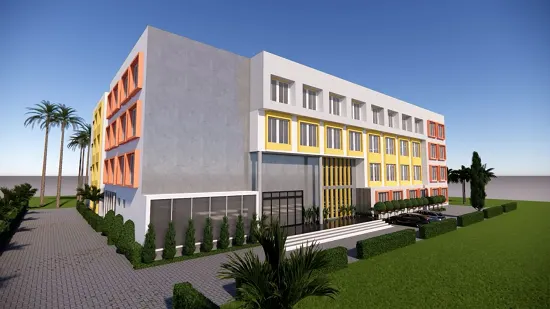
A strong residential candidate on the shortlist for parents in Mangalore. With foundation possibilities for IIT/Medical and more, the school claims to offer CBSE and verifies hostel availability for Classes 4 through 10. Families in Mangaluru can still visit the Venur site, which provides a more tranquil residential setting. Families looking outside city schools but staying in the DK corridor are the primary target audience for this campus, which is ideal for pupils who want an early-stage foundation and dormitory discipline.
Location: Karimanelu village, Venur, Belathangady Taluk, Dakshina Kannada district – near Moodbidri and around an hour’s drive from Mangaluru city.
Hostel safety, study routine, food, medical support
- Bright Horizon offers residential facilities from Class 4 to Class 10, with hostels located inside a secured, greenery rich campus dedicated to CBSE schooling and foundation coaching.
- Separate boys’ and girls’ hostels are supervised by resident wardens and support staff, ensuring round the clock care, attendance tracking and immediate help whenever a child needs support.
- Entry to hostel areas is controlled through campus gates and internal rules, and students follow a defined timetable from wake up to lights out, creating a predictable, safe rhythm of life.
- Daily routine integrates school hours with structured foundation coaching for NEET, JEE, Civil Services and CA, using hostel time productively so children do not depend on outside tuition travel.
- Evening study hours are supervised, with subject teachers or trained mentors clarifying doubts; weaker students receive targeted support so they are not left behind in the residential system.
- The mess serves homely, nutritious food planned for growing children – typically rice or chapati, vegetables, dal, curd and fruits – prepared in a clean central kitchen.
- Filtered drinking water, clean dining halls and regular sanitation checks support student health, particularly important for hostelers who rely fully on campus food.
- An on campus health and wellness setup with basic first aid, nurse support and tie ups with nearby hospitals ensures that minor illnesses and emergencies are handled quickly and professionally.
- Sports, yoga, outdoor play areas and co curricular spaces are integrated into hostel life, helping boarders release stress and remain physically fit while managing a demanding academic schedule.
Why this campus is ideal for outstation students
- Venur’s semi rural setting gives outstation children a quiet, low pollution study environment while still being connected by road to Moodbidri and Mangaluru for travel during vacations.
- Residential CBSE schooling plus integrated foundation coaching means families from smaller towns do not need to send children to separate hostels or distant city coaching centres in early classes.
- Students come from multiple districts and states, creating a diverse hostel community where outstation children quickly find friends who also live away from home.
- A focused campus exclusively devoted to school level education helps avoid the distractions of a large college town, which is particularly useful for children from Class 4 to 10 adjusting to hostel life.
- For parents living or working abroad, Bright Horizon’s structured communication and residential supervision give confidence that their ward’s academics, health and discipline are tracked consistently in their absence.
- The campus offers a blend of modern facilities and rural calm – smart classrooms, labs and sports areas surrounded by greenery – ideal for long term schooling without frequent institutional changes.
CBSE Affiliation — What to Verify Before Enrolling in a Residential School
Every year, CBSE itself warns parents about schools that use misleading phrases like “CBSE pattern,” “affiliated to CBSE (under process),” or “likely to be affiliated.” These phrases mean absolutely nothing legally. Your child can’t sit for CBSE board exams from a school that isn’t formally affiliated — and you’d only discover this in Class 10 when it’s too late to fix.
How to verify in under 3 minutes:
Go to saras.cbse.gov.in — that’s CBSE’s official School Affiliation Re-Engineered Automation System (the old URL was cbseaff.nic.in, which now redirects here). Click on “List of Affiliated Schools.” Select State: Karnataka. Select District: Dakshina Kannada. You’ll get a complete list with each school’s affiliation number, the classes it’s approved to teach, and — critically — the validity period of that affiliation.
What to look for specifically:
Affiliation number format: A legitimate number looks like 830XXX or 831XXX for Karnataka schools. If a school can’t provide this number, walk away.
Validity dates: CBSE affiliations aren’t permanent. They’re renewed every 5 years (or 3 years for provisional). If the affiliation expired in 2024 and hasn’t been renewed, the school is operating in a grey zone.
Class range: Some schools are affiliated only up to Class 8 but advertise themselves as “CBSE schools up to Class 10.” The portal will clearly show the approved class range.
Check this list too.
One extra step that most parents skip: cross-check the school’s UDISE code on the UDISE+ portal (udiseplus.gov.in). Every recognised school in India has a UDISE number, and this confirms the school’s existence in government records independently of CBSE.
Don’t rely on the school’s own website or brochure for affiliation claims.
The 3-minute check on saras.cbse.gov.in is the only verification that counts. CBSE residential schools in Mangalore that are genuinely affiliated will proudly display their affiliation number — and encourage you to verify it.
How CBSE Residential Schools Structure Study Time Differently from Day Schools
Ask any parent whose child switched from day school to boarding, and they’ll tell you the same thing — “my son studies more in one week at hostel than he did in a month at home.” That’s not an exaggeration. It’s the result of a structured daily routine that simply doesn’t exist in most homes.
The Three-Phase Study Model
Most CBSE residential schools near Mangalore — including Sharada Vidyanikethana in Talapady, Bhuvana Jyothi in Shirthady, and Bright Horizon in Venur — follow a three-phase academic structure:
| Phase | Time Slot | What Happens | Day School Equivalent |
|---|---|---|---|
| Morning Prep | 5:30 AM – 7:00 AM | Self-study, memorisation, revision of previous day’s lessons | Usually lost to late wake-ups and rushed mornings |
| Classroom Teaching | 8:30 AM – 3:30 PM | Regular CBSE curriculum, labs, activities | Same for both day and residential |
| Evening Supervised Study | 6:30 PM – 8:30 PM | Homework completion, test prep, doubt-clearing with teachers | Typically replaced by tuition classes, TV, or phone time |
The maths is simple. A boarder gets roughly 3.5 extra hours of focused study daily. Over 220 working days in a school year, that’s 770 additional study hours. For context — that’s more than most private tuition centres in Mangalore deliver in an entire year of weekend batches.
But it’s not just about hours. Quality matters even more. During evening supervised study at a well-run residential school, a subject teacher (not just a hostel warden) sits in the study hall to clarify doubts on the spot. When a Class 8 student gets stuck on a quadratic equation at 7 PM, they don’t wait until tomorrow’s class — they raise their hand and get help right then.
Day scholars, meanwhile, face a completely different reality after 3:30 PM. There’s the commute home (30–45 minutes in Mangalore traffic), a late lunch, maybe a tuition class, then dinner — and by 8 PM, they’re too tired for meaningful study. Phone notifications don’t help either.
For families considering CBSE hostel schools in Mangalore, this structured study advantage is often the deciding factor. It’s not about being strict — it’s about creating an environment where consistent study becomes the default, not the exception.
Spotlight — Bright Horizon International School, Venur
Fourteen kilometres from Moodbidri — and about an hour from Mangalore city — sits a campus that doesn’t look like a typical Mangalore school. Bright Horizon International School in Venur (Belathangady Taluk, Dakshina Kannada) has built something that parents in this belt have been asking for: a CBSE residential school with serious competitive exam coaching starting from Class 5, not Class 9.
Founded by Dr. Sharath Gore — a veteran educationist who received the Karnataka Shikshana Ratna award — the school runs CBSE curriculum from Nursery through Class 10, with residential (hostel) facilities available from Class 4 onward.
What makes Bright Horizon different from other CBSE boarding schools near Mangalore?
Start with the coaching integration. While most residential schools in the Dakshina Kannada belt begin NEET/JEE preparation only from Class 8 or 9 (and even then, usually through external coaching tie-ups), Bright Horizon runs dedicated foundation courses for Medical (NEET), Engineering (IIT-JEE), Civil Services, and CA Foundation from Class 5 itself. That’s a 4–5 year head start in conceptual clarity — and for subjects like Physics, Chemistry, and Biology, early exposure matters enormously.
The campus also emphasises 21st-century skill development — Coding and Artificial Intelligence classes run alongside the regular CBSE timetable, not as afterthoughts. Sports and games are structured, not just “go play during lunch break.” Dr. Gore’s philosophy is visible in how the school operates: small batch sizes, teachers who live on or near campus (so doubt-clearing happens at 7 PM, not just during school hours), and a hostel routine that balances discipline with warmth.
Location is a quiet advantage. Venur is far enough from the noise and distractions of Mangalore city, but close enough (via the Moodbidri–Venur road) that parents from Mangalore, Udupi, Karkala, and even Kasaragod can visit comfortably on weekends. The surrounding green countryside — typical of the Western Ghats foothills — gives students fresh air, space to run, and a calm environment that city campuses simply can’t match.
For parents shortlisting CBSE residential schools near Mangalore, Bright Horizon deserves a campus visit. Call the admissions office, schedule a weekday visit (not on a function day), and see the hostel, the classrooms, and the study hall yourself. Speak with
Dr. Gore’s team directly — they’re transparent about fees, routines, and expectations.
📞 Admissions Enquiry: Visit brighthorizoneducationfoundation.com or contact the school directly for 2026-27 admissions.
📍 Address: Plot No. 1, Near Karimanelu Village, Venur Road, Punjalkatte, Belathangady Taluk, Dakshina Kannada – 574233
CBSE Residential School Fees Near Mangalore — What’s Included (and What Isn’t)
What Parents Should Look for in a CBSE Residential School
High test results and a tidy campus are not the sole characteristics of a successful CBSE residential school in Mangalore. It concerns whether your child will receive daily guidance, safety, and support. Before making a short list or paying the entry or hostel deposit, use this checklist.
- Boarding safety protocols
- Check entry/exit rules, visitor policy, and night-round systems.
- Find out if CCTV is installed in shared spaces, dining rooms, study halls, and hallways (not simply gates).
- Verify emergency contact procedures, disaster drills, and fire safety checks.
- Warden-to-student ratio
- A strong hostel has present, trained wardens who know students by name.
- Prefer hostels with separate floor wardens and a clear escalation system.
- CBSE academic planning
- Seek out a clear weekly schedule that strikes a balance between assignments, tests, revision, and classes.
- Request academic tracking, including mentorship programs, remedial assistance, and regular reports.
- Verify whether the school’s curriculum aligns with class-specific objectives and board guidelines.
- Study hours + coaching support
- Confirm fixed evening study hours supervised by mentors.
- If you want a competitive foundation (NEET/JEE/CET), ask whether it’s optional, age-appropriate, and not forced.
- Food, nutrition & hygiene
- Ask for weekly menus and how dietary needs are handled.
- Inspect kitchen cleanliness, dining supervision, and safe drinking-water systems.
- Hostel room types
- Compare AC/Non-AC options, bed styles, storage, and washroom ratios.
- Check ventilation, daylight access, and crowding per room.
- Medical care & mental wellbeing
- Confirm on-campus clinic, nurse availability, and tie-ups with nearby hospitals.
- Ask if a counsellor/psychologist is available for stress, homesickness, and adolescent support.
- Extracurricular balance
- The best residential schools set aside daily time for sports, arts, clubs, and life skills.
- Look for a schedule that doesn’t sacrifice well-being for marks.
- Weekend routine + outings
- Ask about weekend activities, town visits, and holiday travel rules.
- Good schools keep weekends structured but relaxing.
- Parent-school communication
- Prefer schools that offer fixed call timings, monthly feedback, and transparent hostel updates.
- A clear grievance system is a strong trust signal.
When these basics are strong, residential schooling becomes a positive upgrade — building independence, discipline, confidence, and steady CBSE performance without constant parent worry.
In-Depth Hostel Facilities Guide
For most parents, hostel quality is the real decision-maker. Two CBSE schools can look similar on paper, but the boarding experience decides whether your child feels settled, healthy, and academically consistent. When you visit any CBSE residential campus in Mangalore or nearby Dakshina Kannada, use this facilities lens to compare objectively.
Room options & comfort
While some private campuses offer optional AC rooms, the majority of hostels offer non-AC rooms as usual. Find out if juniors and seniors reside in different wings and how rooms are assigned according on age. Look for practical requirements, such as secure lavatory access, personal storage, sufficient lighting, and decent ventilation. A well-managed hostel will be open about the number of rooms on each floor and the ratio of students to restrooms.
Bed types & personal space
Standard formats include bunk beds for juniors and single- or cubicle-style setups for older students in premium blocks.
Security & supervision
A dependable Mangalore CBSE hostel usually emphasises:
- CCTV in common and corridor zones
- 24/7 warden monitoring
- Separate boys’ and girls’ zones with restricted access
- Night checks and attendance reporting
- These features matter more than marketing claims.
Dining & hygiene
Weekly menus, spotless kitchens, and supervised meals are all features of a strong hostel. Enquire about pest control, drinking water systems, and how they handle specific needs or food allergies.
Laundry & housekeeping
Students benefit from structured laundry schedules and regular room sanitation. Confirm frequency and whether bedding is changed on a routine cycle.
Study hall & evening tuition
The top CBSE boarding schools offer mentor support for any questions and set study hours in a monitored hall. For middle and high school pupils, this one element frequently enhances academic stability.
Wi-Fi & device policy
Many hostels allow controlled access for academic needs. Confirm the rules on mobile phones, screen time limits, and how parents can contact children when needed.
A clean hostel, clear in rules, and consistently supervised is usually the safest long-term choice for admissions.
Fees & Budget Guide
Most fees are split into school tuition + hostel charges, with an annual bundle that may also include food, basic medical support, supervised study, and campus activities. Premium campuses may charge more for AC rooms, lower room occupancy, enhanced sports coaching, and upgraded labs.
What’s usually included
- Boarding + meals
- Study hall supervision
- Basic clinic access
- Regular internal assessments
- Housekeeping schedules
Common extra charges
- Uniforms, books, trips
- Competitive foundation add-ons
- Transport for weekend/drop schedules
- Exam or activity-specific fees
Refund & payment tips
Ask for written clarity on withdrawal timelines, hostel seat cancellation, and whether the school offers term-wise or quarterly plans.
Admission Process 2026
Here’s a clean 1–7 step flow you can use for 2026–27 enquiries:
Step 1: Shortlist by fit
Start with 3–5 schools that match your child’s learning style and your non-negotiables: safety, distance from Mangalore city, budget band, and hostel type (boys/girls/co-ed).
Step 2: Request the 2026 hostel + fee sheet
Ask for a written breakdown of tuition, boarding, food, and any add-on coaching. Also, check if the hostel fee changes by room type (AC/Non-AC) or grade.
Step 3: Submit the application early
For Classes 6–10, many parents apply by January–March to secure the best hostel availability. Primary grades may have a more flexible timeline, but can still fill quickly in popular campuses.
Step 4: Assessment/entrance
Some schools run basic written tests in English, Maths, and Science (age-appropriate). Others evaluate based on previous report cards and an interaction.
Step 5: Parent–student interaction
This aids the school in evaluating students’ independence, communication skills, and preparedness for boarding life. You can also enquire about phone policies, medical care, warden systems, study hours, and weekend routines.
Step 6: Hostel room allocation
Confirm how allocation works: grade-based priority, separate blocks for juniors/seniors, and whether you can choose room categories if multiple options exist.
Step 7: Confirm admission
Pay the admission fee and the first-term fee by the given date. Request written clarity on withdrawal rules, refund timelines, and the hostel cancellation policy.
A simple stress-relieving idea is to schedule a campus visit prior to making the final payment and visually check the hostel’s hygiene, food arrangement, study hall monitoring and safety measures.
FAQ
1. Which is the best CBSE residential school in Mangalore?
The ideal option is determined by your child’s learning preferences, safety standards, and financial constraints. Before making a final decision, make a shortlist of three to five campuses and confirm dormitory policies, warden presence, study hours, and parent communication.
2. Is residential CBSE good for NEET/JEE prep?
Yes, provided the school does not overburden pupils with optional, age-appropriate foundation help. Regular study time and less daily distractions are the biggest benefits.
3. What are the average hostel fees in Mangalore?
Most families budget in three bands: budget, mid-range, and premium. Fees vary by room category, campus size, and add-on coaching, so request a written breakup.
4. Do CBSE hostels allow mobile phones?
For senior classes or set call times, several schools provide restricted, supervised usage. Junior pupils frequently adhere to more stringent guidelines in an effort to cut down on screen time and enhance their routines.
5. How safe are hostels in Mangalore?
Good campuses have established night checks, CCTV in common areas, controlled access systems, and wardens on duty around-the-clock. Enquire about medical tie-ups and emergency procedures
6. Are there air-conditioned hostels?
AC blocks are available on several private campuses as an optional upgrade, typically at a higher annual cost. Verify whether AC is available on a grade-by-grade basis.
7. Do hostels provide extra academic support?
Yes, many run evening study halls and doubt-clearing with mentors. This structured learning block is one of the strongest reasons parents choose boarding.
8. What is the ideal class to shift to boarding?
Many parents prefer Classes 5–7, when children are more emotionally ready and can adapt to a disciplined routine without feeling overwhelmed.
9. How are weekend outing rules managed?
Schools usually permit supervised outings, parent-approved leave, or scheduled holidays. Rules differ, so verify written policies before admission.
10. What food options can parents expect?
Most hostels provide balanced vegetarian/non-vegetarian menus with weekly cycles. Ask about hygiene audits, handling special diets, and drinking water quality.