
Part of our guide to school admissions at Bright Horizon.

| Direct answer: CBSE schools in India ease the post-holiday transition through a structured approach — gradual academic re-entry in the first week, bridge classes to close learning gaps from the previous year, activity-based re-engagement methods, and consistent daily routines that restore study habits before the full syllabus resumes. The CBSE curriculum’s NCERT-aligned sequential design makes this re-entry more systematic than unstructured approaches. |
Every year, across thousands of CBSE schools in India, teachers face the same classroom reality on the first Monday after summer break: students who have spent six weeks in an entirely different daily rhythm — later bedtimes, flexible schedules, minimal study, and sustained screen time — are asked to resume focused academic learning at the pace the syllabus demands. The quality of the student transition after holidays — how deliberately a school manages the re-entry period — has a direct bearing on how students engage with learning across the rest of the academic year.
The challenge is not simply academic. Students returning from long holidays — particularly the summer break that precedes Class 11 or a new primary grade — experience a mix of social anxiety (reconnecting with peers after weeks apart), adjustment fatigue (re-establishing the physical routine of early mornings and structured hours), and cognitive rust (the natural attenuation of active recall when material is not regularly revisited).
This is why the quality of the CBSE school academic restart process matters — not just the quality of the curriculum that follows. A school that handles the first two to three weeks of reopening well positions every student for the full year with better academic confidence and stronger learning habits. Explore academic programmes at Bright Horizon to see how structured re-entry is built into the school’s annual planning.
ⓘ Educational Note: This article provides general educational guidance about CBSE school practices in India. All CBSE curriculum and assessment information is referenced from official sources — cbse.gov.in, ncert.nic.in, and education.gov.in. Verify specific school policies directly with the institution before making school-related decisions. |
Rebuilding Academic Routine After Holidays
The first week of CBSE schools reopening after holidays is typically the most important week of the new academic year — not because the most content is covered, but because the habits, expectations, and rhythms established in that first week shape how students approach learning for months afterwards.
Well-managed CBSE schools structure this first week deliberately. Rather than immediately introducing new-year content at full pace, the week focuses on routine restoration: regular attendance at morning assembly, class timetable familiarisation, teacher-student relationship re-establishment, and light academic activity that builds mental momentum without overwhelming students who are still in transition mode.
Timetable re-adjustment is a practical consideration that CBSE schools address specifically. Students who have spent weeks waking at 9 AM and following no fixed structure need time to physically re-calibrate to a 6:30 AM school-day schedule. Schools that acknowledge this by moderating academic intensity in the first few days — using revision and activity-based tasks rather than new chapter introductions — see better sustained engagement through the first month.
CBSE’s academic calendar, published annually on cbse.gov.in [nofollow], structures the school year in a way that gives affiliated schools a planned framework around which to organise this transition. Schools that use the structured calendar to design a deliberate first-week plan — rather than treating the first week as simply the beginning of the syllabus — consistently establish stronger academic habits across their student body.
Bridge Classes and Revision Programmes
Bridge classes are one of the most effective post-holiday support mechanisms offered by CBSE schools. Unlike conventional revision, which repeats content the student has already covered, bridge classes serve a specific purpose: they cover the prerequisite concepts from the previous year’s syllabus that the new year’s content builds directly upon — addressing exactly the material most likely to have faded during the holiday period.
The NCERT curriculum framework, available at ncert.nic.in, is designed with explicit conceptual sequencing — Mathematics concepts build chapter by chapter and year by year; Science builds from foundational physical and biological principles outward. Bridge classes use this sequencing to identify the specific prior-year anchor concepts a student needs to actively recall before new teaching begins.
A well-run bridge programme includes a diagnostic component: brief subject-wise assessments conducted in the first week that reveal which specific concepts individual students have retained well and which have faded. This is not an examination — it is a teaching tool. Teachers use the diagnostic results to allocate bridge class time to the areas most students need, and to flag individual students who need remedial support before the main syllabus begins.
Remedial teaching within the bridge programme gives these identified students structured additional support — small group sessions with targeted practice — that prevents a compounding gap from forming. A student who re-enters Class 8 Mathematics without having retained Class 7’s fractions and ratios concepts will struggle through the new year if this is not addressed in the first two weeks.
Engaging Teaching Methods to Re-Activate Learning
The instructional approach used in the post-holiday period matters as much as the content covered. A student returning from six weeks of holiday who encounters dense theory and extended note-writing on day one will disconnect quickly — not because the content is too difficult, but because the cognitive mode required is a significant jump from the passive, sensory engagement of holiday activities.
Activity-based learning — hands-on, exploratory tasks that require doing rather than simply listening and noting — is one of the most effective tools CBSE teachers use to re-activate learning engagement in the first weeks after reopening. This approach aligns with the pedagogical direction of the National Education Policy 2020 from the Ministry of Education, which emphasises experiential, child-centred learning as the primary mode for meaningful understanding.
Typical post-holiday activity-based approaches in CBSE schools include:
- Classroom quizzes and rapid-recall games — low-stakes competitive activities that warm up memory pathways without the pressure of formal assessment, covering vocabulary, formulas, dates, and concepts from the previous year.
- Group discussions and collaborative tasks — structured group work that re-establishes peer communication, rebuilds classroom social dynamics, and surfaces prior knowledge through conversation.
- Smart class digital content — visual and interactive presentations using smart classroom facilities that re-engage visual learners and re-introduce subject content through multiple sensory channels.
- Project-based introductions — asking students to research or create something related to the new year’s first unit, which develops curiosity before direct teaching begins.
The principle underlying all of these is the same: re-activate before introducing. A student whose prior knowledge is actively engaged is far better positioned to absorb new content than one who has been passive for weeks and is immediately asked to extend.
Emotional and Psychological Support for Students
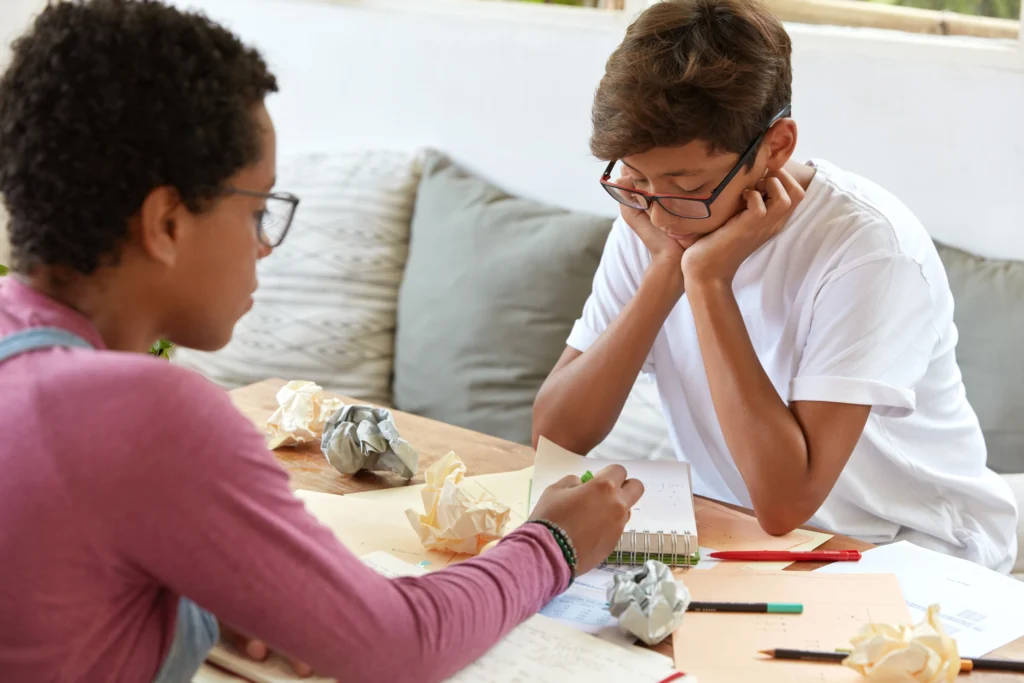
Academic transition after holidays is not purely a cognitive challenge — it is an emotional and social one as well. Students who have been in unstructured holiday environments — sleeping later, having fewer responsibilities, spending time in familiar home settings — experience a genuine emotional adjustment when the demands and social complexity of school life resume.
CBSE schools that handle this emotional dimension deliberately build it into the first week’s structure. Teachers who acknowledge the transition explicitly — validating that coming back to school after a long break requires adjustment — create psychological safety for students who might otherwise feel that their re-entry difficulty is a personal failing.
Motivation sessions, which may be as informal as a class teacher sharing goals and expectations for the new year and asking students to reflect on their own, restore a sense of purpose and forward direction that pure academic content cannot immediately provide. When students understand what they are working toward and why the new academic year matters, the engagement that holiday distance eroded tends to return within the first few days.
Peer interaction is a particularly important emotional lever in the post-holiday period. Many students re-enter school in a state of mild social anxiety — uncertain of friend group dynamics, unsure how relationships have shifted during the break. Schools that build structured peer interaction into the first week — group activities, class introductions for new students, circle discussions — re-establish the social fabric that makes school a comfortable and engaging environment.
For students making significant transitions — moving from primary to upper primary, or from Class 10 to Class 11 — the emotional and psychological adjustment is particularly acute. CBSE schools with dedicated counselling support available during reopening give these students an important safety net.
Structured Daily School Routine for Smooth Transition
The daily school routine is, in itself, one of the most powerful transition tools CBSE schools have. The predictable structure of a school day — fixed times for classes, assembly, lunch, and activities — provides an external scaffold for students whose internal time management has become loose during holidays. This scaffold reduces the cognitive effort of self-organisation and allows mental energy to be directed toward learning.
Morning assembly is not merely an administrative procedure. It re-establishes the daily communal rhythm of school life — a shared start time, a shared physical space, shared expectations for the day. Schools that invest in making the first few assemblies after reopening engaging and welcoming — including acknowledgement of the new academic year, motivational inputs from the principal, and student-led activities — use assembly as a genuine transition tool rather than a formality.
The balance between academic content and extracurricular activities in the first weeks of school is a deliberate planning decision for well-run CBSE schools. A timetable that front-loads academic content heavily and defers activities to later in the term misses the transition opportunity that activities provide: sports, arts, and community events re-engage student energy and motivation in ways that classroom instruction alone cannot.
Time management as a skill is also explicitly addressed by CBSE schools during the post-holiday period — particularly for students in Classes 9 and above who are managing increasing subject loads. Teachers and class mentors revisit study schedule planning, note organisation habits, and examination preparation timelines in the first few weeks, ensuring students re-establish these competencies before the academic load intensifies.
Post-Holiday Transition Timeline — How CBSE Schools Structure the Re-Entry:
Phase | Typical Timing | Primary Focus | Key Activities | Expected Outcome |
Re-Orientation | Week 1 of reopening | Routine re-establishment and social reconnection | Morning assembly focus, teacher-student interaction, light classwork, school tour for new students | Students re-engage with school environment; anxiety reduced |
Academic Re-Activation | Week 2 | Identifying learning gaps from previous year | Diagnostic tests, NCERT-linked revision sessions, bridge class introductions | Individual learning gaps mapped; targeted support begins |
Structured Learning Begins | Weeks 3–4 | Resuming syllabus at measured pace | Full timetable resumes, new chapter introductions, project work assigned | Core subjects underway; students in active learning rhythm |
Consolidation | Week 5 onwards | Complete academic programme integration | Internal assessments, group activities, competency checks, extracurricular schedule | Students fully integrated into academic year at expected pace |
Role of Parents in Transition Support
The school’s transition support is most effective when it is reinforced at home. Parents play an essential role in the post-holiday re-entry period — and the most valuable contribution is not academic drilling but structural reinforcement of the habits and rhythms the school is also trying to re-establish.
The single most impactful thing a parent can do in the week before school reopens is begin adjusting the family’s sleep and wake schedule toward school-day timing. A student who has been sleeping at 11 PM and waking at 9 AM during holidays and is expected to be at school by 8 AM on the first day faces a physiological challenge that no amount of motivation can immediately resolve. A gradual shift — moving bedtime and wake time earlier by 30 minutes each day in the final days of holidays — significantly reduces this disruption.
During the first weeks of reopening, parent resource support from schools plays an important role. Parents who stay in communication with class teachers — asking not just about marks but about how the child is settling emotionally and socially — enable early identification of transition difficulties that can be addressed before they become entrenched problems.
Encouraging reading at home — even 15–20 minutes of independent reading in the child’s chosen material — during the post-holiday period maintains the active engagement with language and ideas that has gone quiet during the break. It does not need to be curriculum-related; the habit of reading sustains the cognitive engagement that academic reading requires.
Parents of students preparing for CBSE board examinations (Classes 10 and 12) should additionally ensure that the post-holiday period includes a structured review of the previous year’s syllabus, given that CBSE board examinations cover cumulative content. An early start on this review — supported by the school’s bridge class programme — reduces last-trimester pressure significantly.
CBSE Curriculum Advantage in Post-Holiday Learning
Understanding the CBSE education system benefits for post-holiday re-entry starts with recognising how the curriculum itself is designed. CBSE governs an NCERT-aligned curriculum framework, maintained by NCERT, that has been developed with continuity of learning as an explicit design principle — a structural advantage that directly supports the post-holiday transition process.
Factor | CBSE Approach | Why This Helps Post-Holiday Transition |
Curriculum structure | NCERT-aligned, sequentially designed subject content (ncert.nic.in) | Previous year’s content builds directly on new year — easier to resume from a known base |
Assessment framework | Formative assessments throughout the year (not only exam-based) | Regular internal checks catch learning gaps before they compound; not left to year-end |
Academic calendar | Structured annual calendar published by CBSE (cbse.gov.in) | Schools plan transition activities systematically in advance of each reopening |
Learning philosophy | Competency-based, understanding-focused (NEP 2020 aligned) | Students reconnect through concept understanding, not rote memorisation catch-up |
Teacher support | CBSE orientation and training programmes for affiliated schools | Teachers equipped with structured methods for post-holiday re-engagement |
Student evaluation | Portfolio, projects, and periodic tests alongside board exams | Multiple evaluation modes reduce pressure of single exam re-entry |
The National Education Policy 2020 — the overarching education framework from the Ministry of Education — has further strengthened CBSE’s post-holiday transition capacity by emphasising competency-based learning over content memorisation. When students are assessed on their ability to apply and understand concepts rather than reproduce them from memory, the post-holiday re-engagement question shifts from ‘how do we get students to remember what they memorised’ to ‘how do we reactivate the understanding they built’ — a much more achievable goal in a structured first two weeks of school.
For parents exploring the school reopening CBSE curriculum structure at Bright Horizon, the school’s CBSE curriculum outlines how the NCERT-aligned academic programme is structured across all classes.
How Schools Prepare Teachers for Post-Holiday Restart
A student’s post-holiday transition experience is directly shaped by how well their teachers are prepared for it. CBSE-affiliated schools that invest in structured teacher preparation before the academic year begins — not just during — consistently deliver more effective post-holiday re-entry experiences for students.
Pre-term teacher planning meetings are a standard practice in well-managed CBSE schools. In these meetings — typically held in the week before students arrive — subject teachers review the previous year’s class performance data, identify the specific concepts or units that showed weak outcomes, and plan the bridge class content accordingly. This pre-planned approach is far more effective than teachers individually improvising revision sessions based on their own assessment of what students might have forgotten.
Lesson re-alignment is the process of reviewing the new year’s syllabus in light of the diagnostic results from the first week. Where teachers find that a significant proportion of students are missing specific prerequisite knowledge, they adjust the pacing of the new year’s early units to build from the actual current understanding level of the class rather than the assumed baseline. The faculty at Bright Horizon conducts annual pre-term academic alignment sessions aligned with the CBSE academic calendar.
CBSE also provides orientation and training support for teachers of affiliated schools through its regional offices and teacher development programmes. These programmes equip teachers with updated pedagogical approaches — including competency-based assessment design and activity-based learning methods — that directly support effective post-holiday classroom re-engagement.
Student performance review — examining the previous year’s internal assessment results and board examination performance — gives teachers specific information about which students will need additional support in the transition period. A teacher who enters the new academic year knowing which three students in their class struggled most with fractions last year can direct bridge class and diagnostic test resources toward those students deliberately, rather than treating post-holiday support as a generic intervention.
Conclusion – Smooth Transition Leads to Better Academic Performance
The quality of a student’s post-holiday transition is not determined by the student alone — it is substantially shaped by the school’s systems, the teachers’ preparation, and the family’s home support. CBSE schools in India that approach the reopening period with deliberate structure — through bridge classes, gradual academic re-entry, activity-based re-engagement, and emotional transition support — give their students a stronger foundation for the academic year that follows.
The CBSE curriculum’s NCERT alignment and competency-based assessment framework are structural advantages that make this transition support more effective than in less systematically designed academic programmes. When a student re-enters a CBSE school after holidays, the curriculum they return to is designed to be resumed from a known position — sequentially, conceptually, and with assessment practices that identify gaps early rather than late.
For parents, the key takeaway is that active involvement in the first few weeks — sleep schedule management, home reading, and school communication — reinforces what the school’s transition programme is designed to achieve. Students who transition most smoothly after long holidays tend to be those whose home environment and school environment are aligned in supporting the return to structured learning — with families and teachers working from the same framework rather than in separate directions.
▶ Bright Horizon International School — CBSE Admissions Bright Horizon International School provides structured CBSE education with experienced faculty, modern learning facilities, and a systematic academic calendar designed to support students from day one of every new school year. For parents seeking a CBSE school that invests in holistic student development alongside academic excellence: Explore admissions | Contact Bright Horizon | About the school |
Frequently Asked Questions
Q1. How do CBSE schools help students get back to routine after long holidays?
CBSE schools typically follow a structured re-entry approach: the first week focuses on re-orientation and routine re-establishment rather than heavy academic content. Morning assemblies restart the daily structure, teachers facilitate informal peer interactions, and light revision work eases students back into academic habits. Bridge classes identify and address learning gaps from the previous year, and the CBSE academic calendar — published on cbse.gov.in — gives schools a structured framework to plan this transition in advance of every reopening.
Q2. What are bridge classes in CBSE schools?
Bridge classes are structured revision sessions conducted by CBSE schools in the first few weeks after reopening — typically after summer break or any extended holiday. They cover key concepts from the previous academic year that are prerequisites for the new year’s syllabus, and include diagnostic assessments to identify individual students who need additional support. Bridge classes are not a repeat of old content; they are targeted preparation that connects the previous year’s learning to the new year’s starting point, reducing the ‘restart shock’ that students would otherwise experience.
Q3. How can parents help their children transition smoothly after summer break?
Parents play an important supporting role in the post-holiday transition. The most practical contributions include gradually restoring sleep schedules to school-day timing at least a week before reopening, re-establishing a daily reading habit during the final days of holidays, limiting screen time and returning to structured daily activities, and staying in communication with the class teacher during the first few weeks of reopening to track how the child is settling. CBSE schools benefit most from parents who reinforce the school’s transition structure at home rather than treating the first school week as an extension of holiday routine.
Q4. What makes CBSE schools more effective at managing post-holiday learning gaps?
CBSE schools affiliated with the Central Board of Secondary Education (cbse.gov.in) follow an NCERT-aligned curriculum (ncert.nic.in) that is designed with sequential concept building — each year’s content explicitly builds on the previous year’s foundation. This design makes systematic revision more effective than in ad-hoc curricula. CBSE’s assessment framework, aligned with the National Education Policy 2020 (education.gov.in), emphasises formative assessments throughout the year — meaning learning gaps are identified and addressed continuously rather than accumulating until board examinations.
Q5. What activities do CBSE schools use to re-engage students after holidays?
CBSE schools use a range of re-engagement activities in the post-holiday period: activity-based learning (hands-on, project-style tasks that re-activate curiosity before heavy theory), group discussions and classroom quizzes that rebuild peer interaction and communication habits, smart class sessions that use visual and interactive content to reconnect with subject material, morning assembly routines that restore the daily rhythm of discipline and community, and motivational interactions from teachers and counsellors that address the emotional transition from holiday mode to learning mode. The blend of structured and informal re-engagement activities is a key feature of well-managed CBSE school reopenings.
CBSE schools typically follow a structured re-entry approach: the first week focuses on re-orientation and routine re-establishment rather than heavy academic content. Morning assemblies restart the daily structure, teachers facilitate informal peer interactions, and light revision work eases students back into academic habits. Bridge classes identify and address learning gaps from the previous year, and the CBSE academic calendar — published on cbse.gov.in — gives schools a structured framework to plan this transition in advance of every reopening.
Bridge classes are structured revision sessions conducted by CBSE schools in the first few weeks after reopening — typically after summer break or any extended holiday. They cover key concepts from the previous academic year that are prerequisites for the new year’s syllabus, and include diagnostic assessments to identify individual students who need additional support. Bridge classes are not a repeat of old content; they are targeted preparation that connects the previous year’s learning to the new year’s starting point, reducing the ‘restart shock’ that students would otherwise experience.
Parents play an important supporting role in the post-holiday transition. The most practical contributions include gradually restoring sleep schedules to school-day timing at least a week before reopening, re-establishing a daily reading habit during the final days of holidays, limiting screen time and returning to structured daily activities, and staying in communication with the class teacher during the first few weeks of reopening to track how the child is settling. CBSE schools benefit most from parents who reinforce the school’s transition structure at home rather than treating the first school week as an extension of holiday routine.
CBSE schools affiliated with the Central Board of Secondary Education (cbse.gov.in) follow an NCERT-aligned curriculum (ncert.nic.in) that is designed with sequential concept building — each year’s content explicitly builds on the previous year’s foundation. This design makes systematic revision more effective than in ad-hoc curricula. CBSE’s assessment framework, aligned with the National Education Policy 2020 (education.gov.in), emphasises formative assessments throughout the year — meaning learning gaps are identified and addressed continuously rather than accumulating until board examinations.
CBSE schools use a range of re-engagement activities in the post-holiday period: activity-based learning (hands-on, project-style tasks that re-activate curiosity before heavy theory), group discussions and classroom quizzes that rebuild peer interaction and communication habits, smart class sessions that use visual and interactive content to reconnect with subject material, morning assembly routines that restore the daily rhythm of discipline and community, and motivational interactions from teachers and counsellors that address the emotional transition from holiday mode to learning mode. The blend of structured and informal re-engagement activities is a key feature of well-managed CBSE school reopenings.