
Published | Last updated
Screen-free Dasara holidays work best as a few planned activities, not a ban: daily reading, outdoor play, one creative project, a festival tradition and family games. The Indian Academy of Pediatrics advises no screens below age 2 and under 2 hours a day for ages 5 to 10.
Dasara breaks the school routine for children across Karnataka, and the gap is usually filled by a phone or a television. A child who finishes homework in forty minutes during term can drift into an entire afternoon of videos by the third day of the break. Parents notice, feel guilty, and either confiscate the device or give up. Neither lasts. Screen-free Dasara holidays work better when they are planned than when they are enforced: offer something worth doing, keep a loose routine, and let screens take a smaller share of the day. Below are seven activities, a sample day and what schools can do.
Why Screen-Free Activities Matter During Dasara Holidays
Screens are not the enemy. A video call with grandparents is a sensible use of a device. The trouble starts when screens crowd out movement, sleep, meals and conversation. The Indian Academy of Pediatrics (IAP) puts numbers on this in its 2022 screen-time guidelines.
| Age group | IAP screen-time guidance | Daily physical activity |
| Below 2 years | No exposure to any type of screen | Physical play, stories, music and movement |
| 2 to 5 years | Maximum 1 hour a day, supervised, sessions of 20 to 30 minutes | At least 3 hours, including 1 hour of moderate-to-vigorous activity |
| 5 to 10 years | Less than 2 hours a day, homework screen time included; “the lesser, the better” | At least 1 hour of moderate-to-vigorous activity |
| 10 to 18 years | No fixed limit; reduce it if it affects sleep, meals, school or family time | At least 1 hour of outdoor physical activity |
The same guidance asks families to switch screens off an hour before bedtime. A holiday is the easiest time to test that rule, because nobody wakes up for school. A loose routine also leaves room for movement, play and exploration without boring children by noon.
7 Screen-Free Dasara Holiday Activities for Children
These Dasara holiday activities for students suit most ages from Class 1 to Class 10, with small changes for the child’s age, and none needs more than what most homes already have. Parents who want a longer, generic list of screen-free activities for children during holidays can use UNICEF’s age-wise ideas. The seven below are tied to the festival and to Karnataka’s own traditions.
1. Read Beyond the Textbook

Storybooks, comics, biographies and age-appropriate nonfiction all count. A daily target keeps it concrete: ten pages for a Class 3 child, thirty or forty for a Class 8 child. Ask for a favourite story to be retold at dinner, or start a reading journal.
2. Make Something: Arts, Crafts and Creative Projects
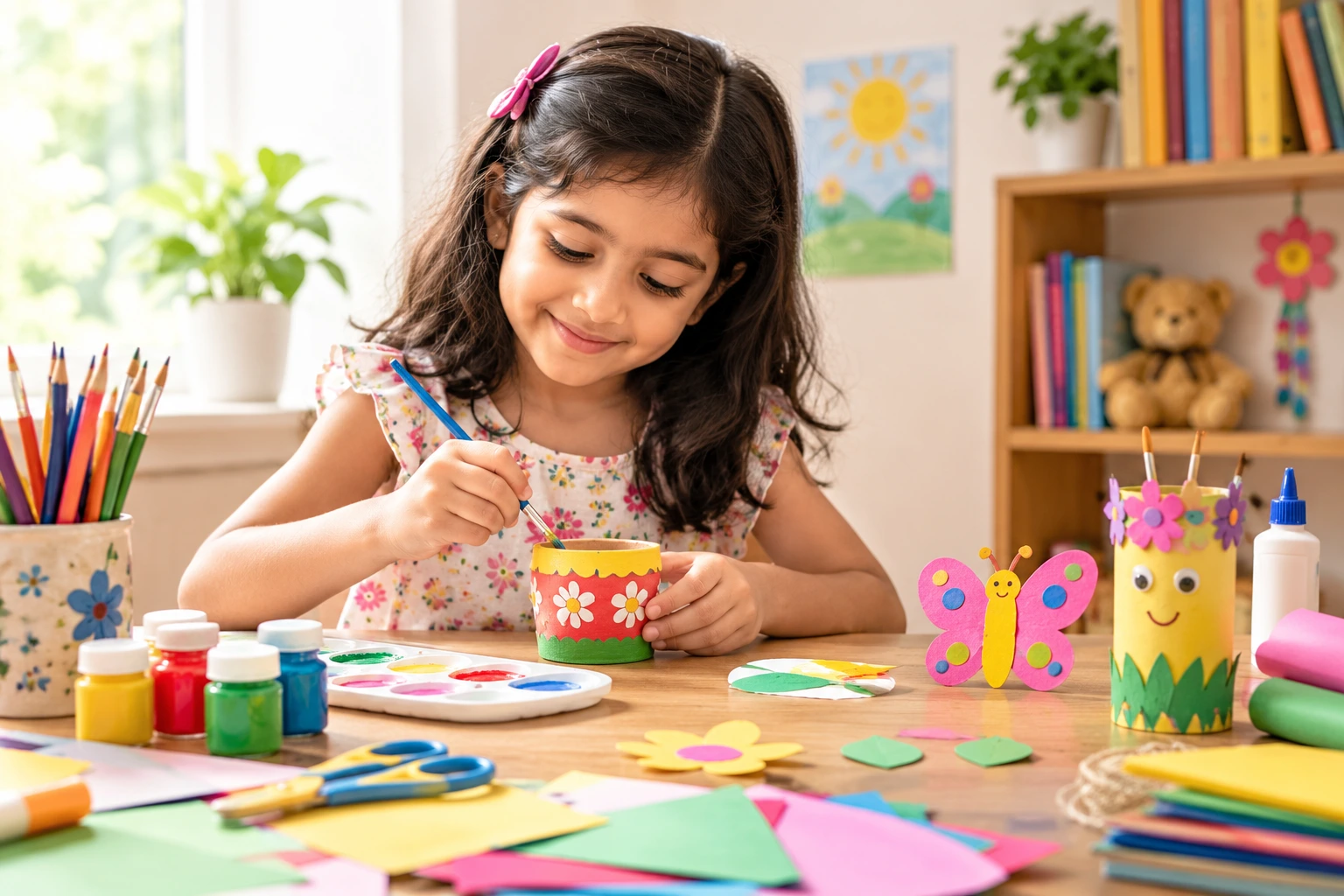
Drawing, painting, clay modelling and handmade decorations make Dasara a season of creative learning activities for children. A small doll display in the bombe habba tradition, greeting cards for relatives or festival-themed artwork gives the work a purpose and an audience.
3. Make Outdoor Play Part of Every Day

Cycling, badminton, football, nature walks and traditional games such as lagori or kho-kho are easy outdoor activities for children during holidays. Match the activity to age and ability, keep an adult within sight of younger children, and plan an indoor backup for a rainy afternoon. One evening of play can cover the IAP’s hour of movement for ages 5 to 10.
4. Introduce Dasara Traditions and Culture

Dasara is celebrated differently across Karnataka. The official Mysuru Dasara site dates the celebrations in Mysuru to 1610 AD and calls the Jumboo Savari on Vijayadashami the grand finale. For families in Dakshina Kannada, Mangaluru’s Dasara centres on the Kudroli Gokarnanatheshwara Temple, where idols of Sharada, Mahaganapati and the Navadurgas are installed for nine days, and the Pili Vesha tiger dance is part of the season. Tell the stories behind these in simple terms and talk about courage, kindness and responsibility.
5. Give Children Real Jobs at Home
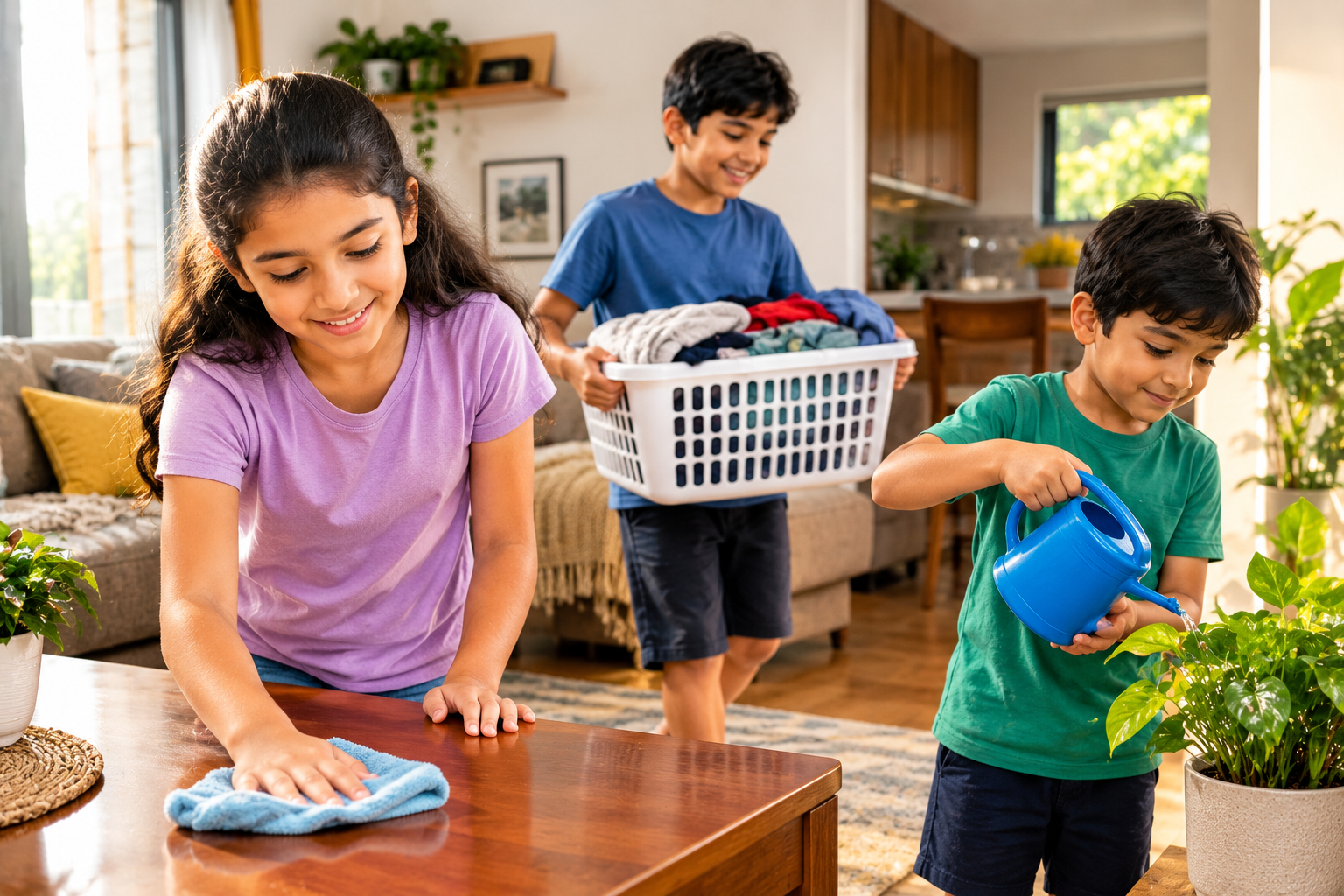
Ayudha Puja, observed in Karnataka households around Navami, is a natural opening: children can clean and arrange their own books, pencil boxes and school bags for the puja. Watering plants, laying the table and helping with a simple meal, always with an adult nearby, build independence.
6. Plan Family Games and Shared Activities
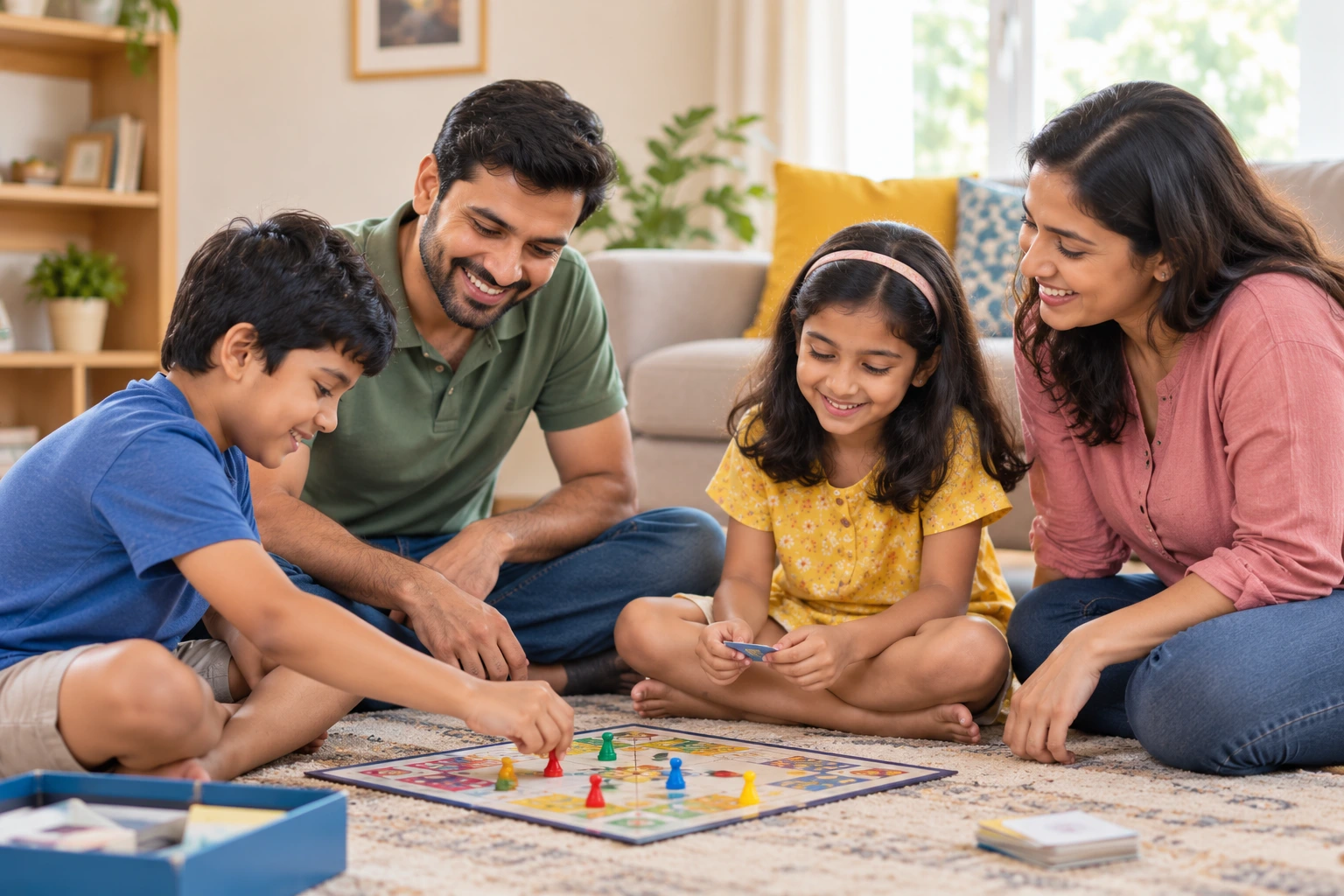
Board games, puzzles, storytelling, treasure hunts and family quiz evenings invite talk and teamwork. These holiday activities for school children cost little and need almost no preparation. Fix one device-free hour each evening, for adults too. A parent scrolling during the quiz teaches the opposite lesson.
7. Try Hands-On Learning and Small Projects
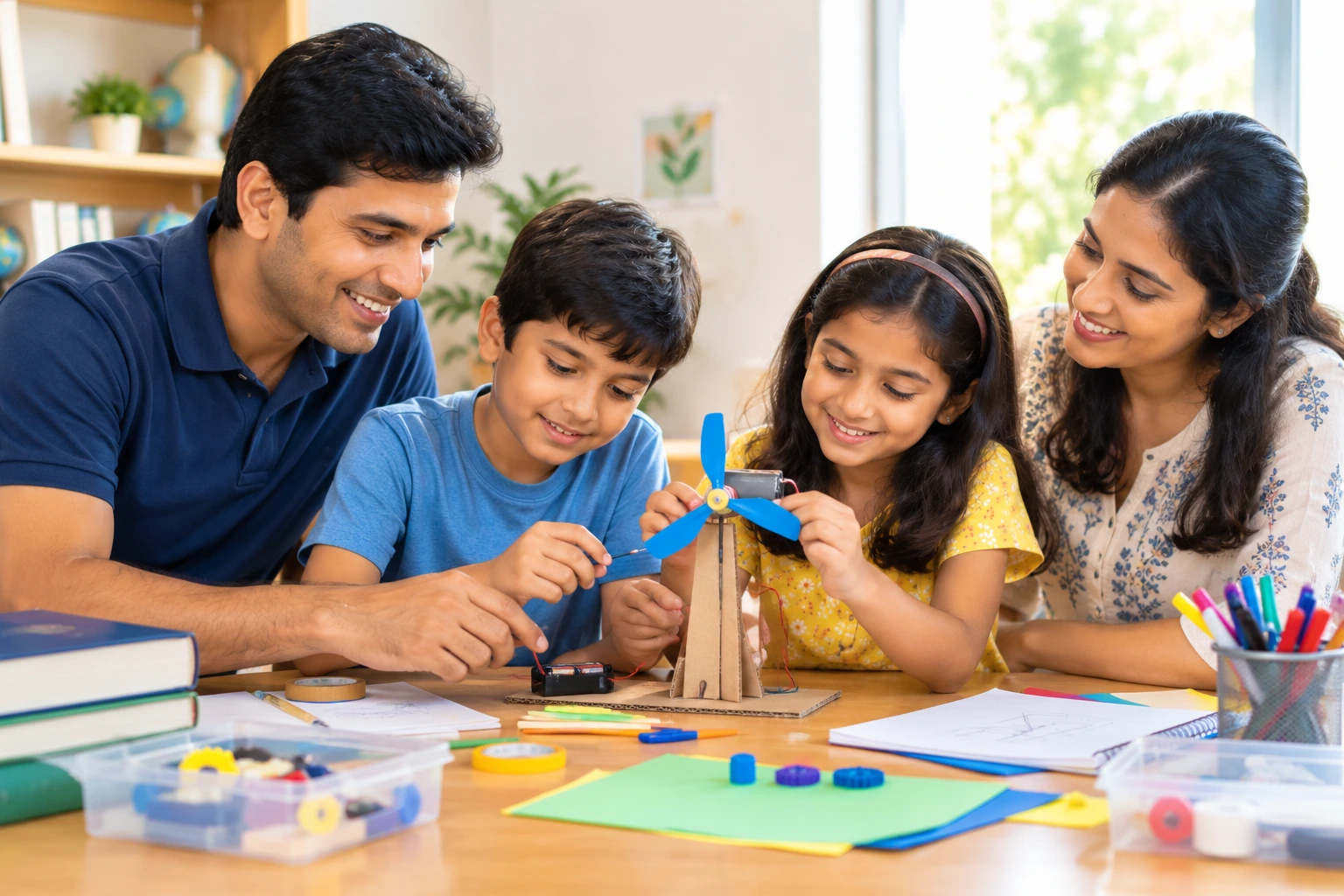
Simple experiments with adult supervision, such as sprouting green gram on a wet cloth and measuring the shoots daily, work well. So do nature journals and tasks like counting bird species from the balcony. Younger children can draw what they see; older ones can record dates and measurements.
How Schools Can Encourage Screen-Free Learning During Holidays
Parents often ask schools for educational activities during school holidays, and for suitable activities for students during Dasara holidays in particular, so the school’s choices matter. An optional reading list, a short creative project and festival-themed tasks linking classroom topics to real life all help, as does project work that rewards curiosity in place of pages of copying.
Teachers can also guide parents towards balanced holiday routines. At Bright Horizon International School in Venur, the activities page lists a Speakers Club, Mathematics Club, Coding Class and Dance Club; storytelling, puzzles and movement carry over into holiday play. The link between extracurricular activities and student development has its own guide. Families comparing schools in and around Mangalore or CBSE options near Mangalore can reasonably ask how a school treats the weeks it is closed.
Ways to Reduce Screen Time for Children During Dasara
Ways to reduce screen time for children depend on involvement more than rules. Our guide to digital childhood and real-world childhood covers the wider balance; these steps suit the break.
- Agree on device rules with the child before Dasara starts, using the IAP limits for the child’s age.
- Offer the alternative first: lay out the paints or the carrom board, then suggest a screen-free hour.
- Protect shared screen-free periods: meals, the evening puja and the hour before bed.
- Let the child pick three or four activities from the list above.
- Keep your own phone away during family time.
- Keep calls to relatives and homework needs outside the count.
Admission Enquiry
Nursery to Class 10, with hostel facilities from Class 4. Tell us a little about your child and we will call you back.
Thank you. Your enquiry has been received.
A member of our admissions team will call you shortly. If you need us sooner, call +91 89707 97028 or message us on WhatsApp.
A Simple Screen-Free Dasara Holidays Routine
Treat this as a sketch, not a timetable.
| Time of day | Activity | Adjust for |
| Morning | Outdoor play, a walk or cycling | Adult close by for younger children |
| Late morning | Reading, drawing or a craft project | Longer projects for Class 6 and above |
| Afternoon | Rest, family time or a supervised practical task | Move indoors in rain or heat |
| Evening | Traditional games, Dasara stories or time outdoors | Local temple celebration, if planned |
| Night | Storytelling or reading, screens off an hour before sleep | Age-appropriate sleep time |
Make This Screen-Free Dasara Holidays
Holidays should include rest, enjoyment and time with family, so do not schedule every hour. Pick a few activities the child likes and repeat them: a reading corner, an evening game, a shared chore. Balanced screen-free Dasara holidays leave children rested and a little more curious, and schools that guide parents towards that balance support learning beyond the classroom.
Frequently Asked Questions
How much screen time is acceptable for children during Dasara holidays?
The Indian Academy of Pediatrics advises no screens below age 2, a maximum of 1 hour a day for ages 2 to 5, and less than 2 hours a day for ages 5 to 10. Adolescents should balance screens against sleep, meals, hobbies and family time.
How can I reduce my child’s screen time without a daily argument?
Agree on the routine before the holidays begin, offer an appealing alternative before removing a device, and keep fixed screen-free periods such as meals and bedtime. Letting the child choose some activities improves cooperation more than strict rules.
Is all screen time bad for children during the holidays?
No. Video calls with relatives, a coding class or an educational programme can be useful. The concern is screens replacing sleep, movement, meals and conversation, so age-appropriate limits and supervision matter more than a total ban.
How can schools help children avoid too much screen time during holidays?
Schools can share optional reading lists, set creative or festival-themed projects instead of heavy written homework, and advise parents on balanced routines before the break begins.
About the Author
- Dr. Sharath Gore is the Founder & Chairman of Bright Horizon International School, Venur, Dakshina Kannada, and a Karnataka Shikshana Ratna awardee. The school’s website states 15 years of mentoring experience. Read the Chairman’s message
- Reviewed by L K Monu Borkala, a digital marketing strategist with 20+ years of SEO experience and over 650 client campaigns across India and UAE. As a founding member of OneCity Technologies, Bangalore, he oversees content strategy, editorial compliance, and SEO frameworks across education, business services, and digital marketing verticals.
Explore Bright Horizon International School to learn more about its educational approach and student development opportunities. Call +91 89707 97028 or WhatsApp +91 80738 91495.