
Time Table for Study: How CBSE Students Can Build the Best One
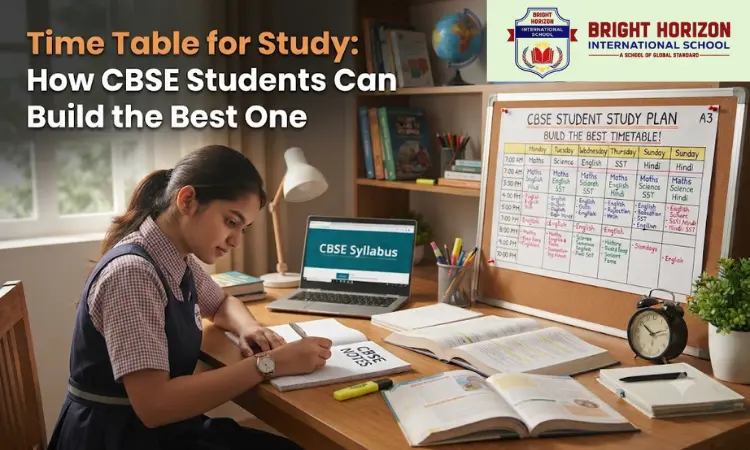
A good time table for study starts with the school day, not the textbook. Fix school hours, meals, homework and sleep first. Then fill the free slots with subject sessions of 45 to 60 minutes, hardest subject first, with a 10-minute break between sessions. Review the plan every Sunday and change what did not work. […]
What Is the CBSE Age Limit for Class 1 Admission?
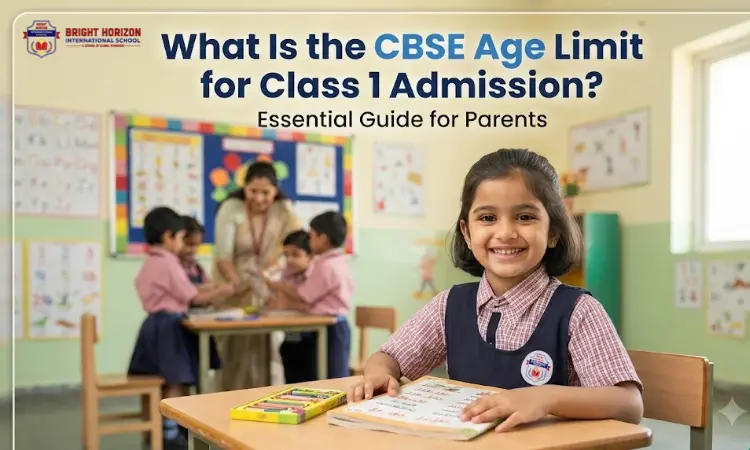
The CBSE age limit for class 1 admission is 6 years. The child must complete 6 years by March 31 of the academic year of admission. In Karnataka, the state government sets its own cutoff date (typically June 1) and may announce session-specific relaxations. Parents should check the latest official notification for the academic year […]
How to Score Good Marks in CBSE Class 10 Board Exam Preparation?
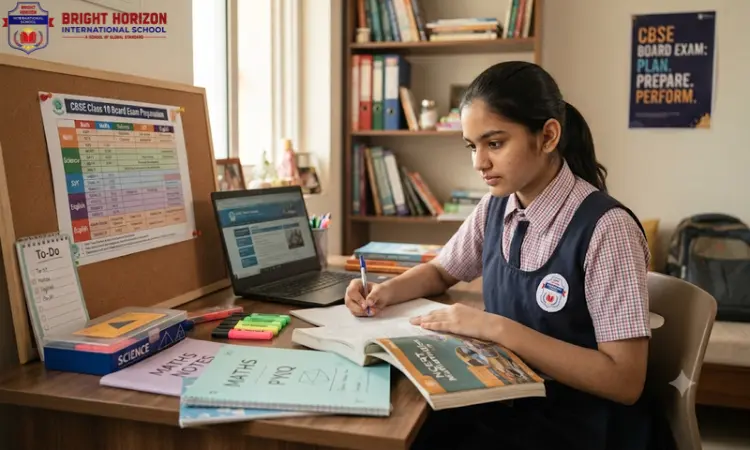
CBSE Class 10 board exam preparation requires a structured daily study plan, thorough understanding of NCERT textbooks, regular practice with sample papers and previous years’ questions, subject-wise preparation strategies, and consistent revision. Students who start early, follow a timetable and practise under exam conditions score better than those who rely on last-minute studying. CBSE Class […]
Activities for Shy Students in School: A CBSE Guide
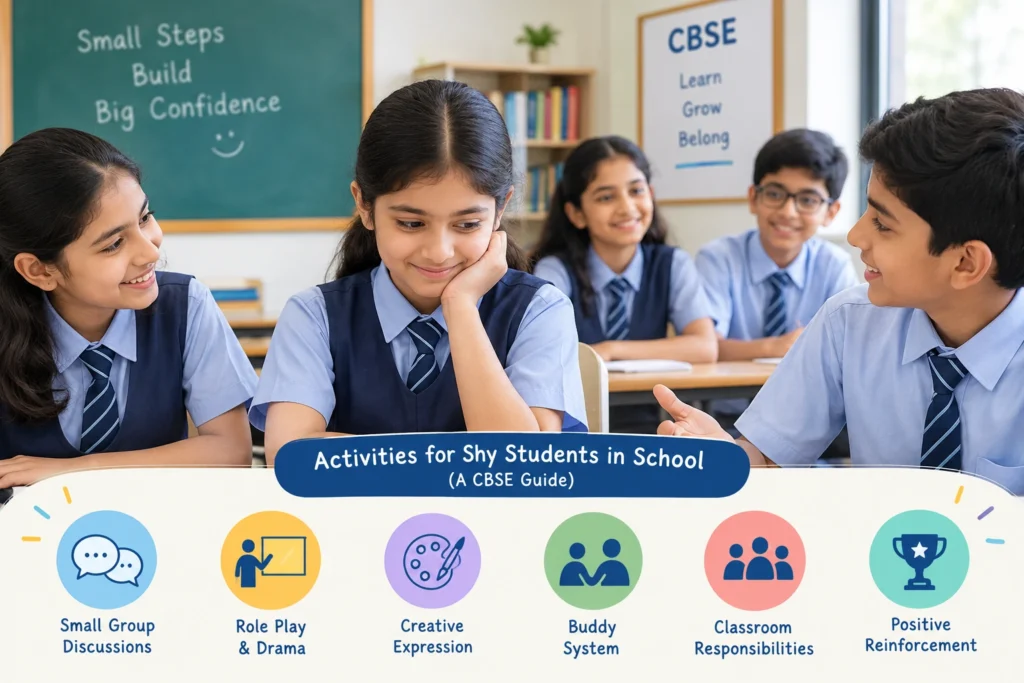
The best activities for shy students in school do not depend on speaking before the whole class. Pair work, small-group roles, hands-on projects, art and interest-based clubs let a quiet child take part at their own pace. Prepare students before they speak, value effort over volume, and confidence follows repeated safe experiences. Picture a Class […]
School Clubs for Students: How They Help Kids Discover Interests

School clubs for students work as low-pressure trials. A child tries activities outside the timetable, repeats the ones they enjoy and sees where they improve without exam stress. No prior skill is needed. After a term or two, the clubs a child keeps returning to usually point to a real interest. Some children never raise […]
7 Powerful Screen-Free Dasara Activities to Boost Kids’ Learning

Screen-free Dasara holidays work best as a few planned activities, not a ban: daily reading, outdoor play, one creative project, a festival tradition and family games. The Indian Academy of Pediatrics advises no screens below age 2 and under 2 hours a day for ages 5 to 10. Dasara breaks the school routine for children […]
CBSE School for NEET JEE Preparation: Building the Foundation
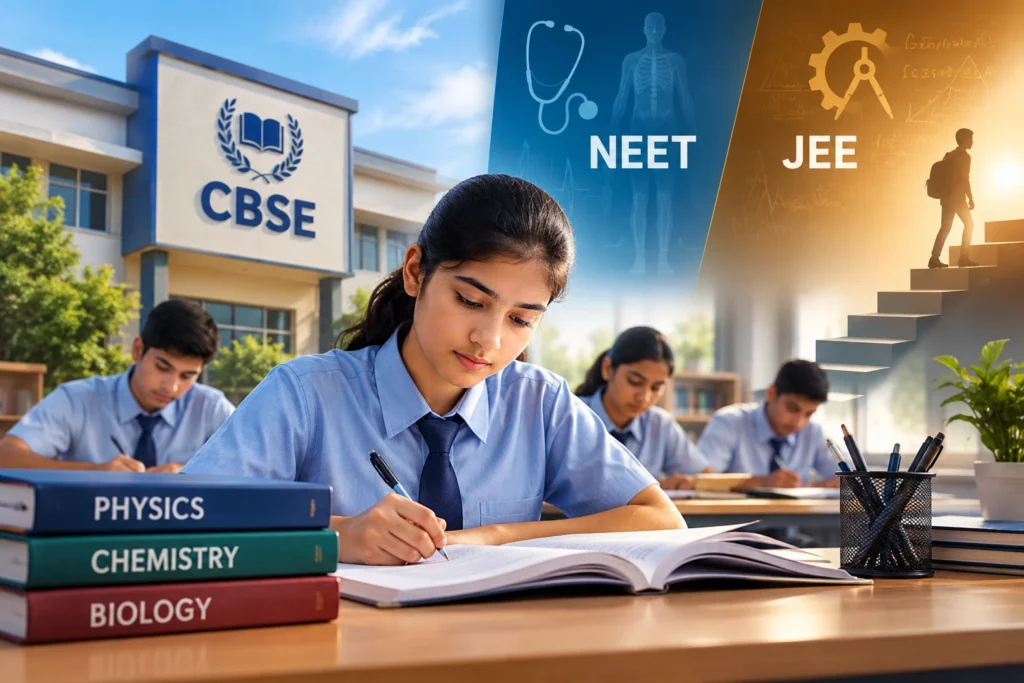
A CBSE school for NEET JEE preparation builds the base long before Class 11: concept-based Physics, Chemistry, Biology and Mathematics, NCERT-led learning, practical work and steady study habits. The school does not replace exam training, but strong fundamentals formed in the middle years make later preparation easier to build on and less dependent on memorising. […]
CBSE Mid-Term Exam: A Stress-Free Guide for Parents
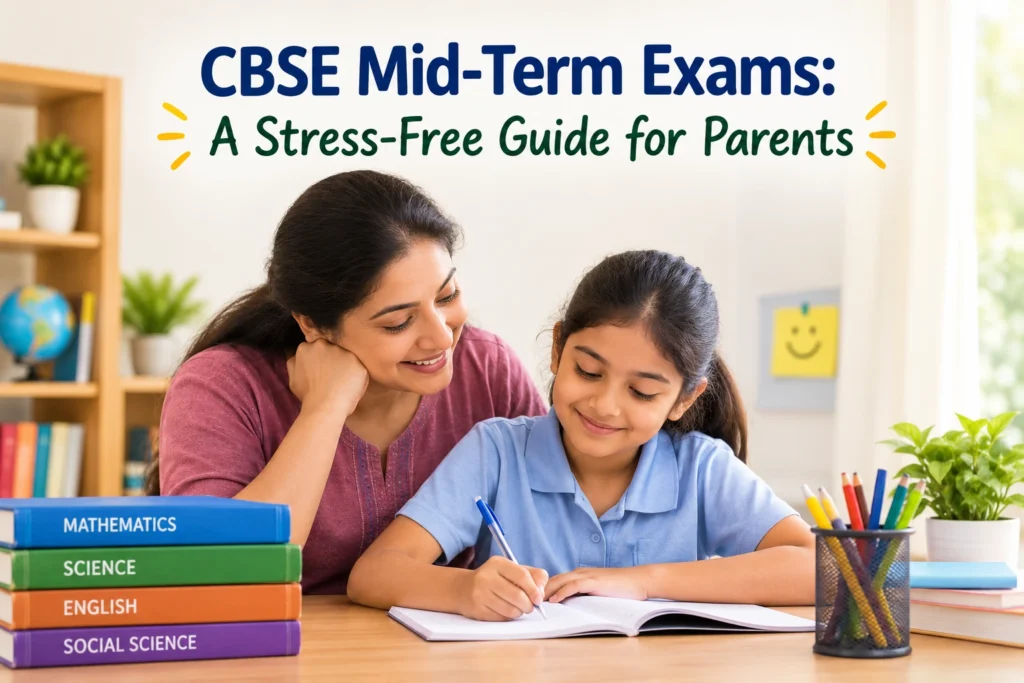
CBSE mid-term exam preparation works best when parents help build a realistic study plan, support a consistent revision routine across subjects, protect sleep and breaks, and focus conversations on progress rather than marks, acting as a supporter during preparation rather than an additional source of pressure at home. Mid-term exams tend to arrive with a […]
Common NEET Preparation Mistakes Students Should Avoid

The most common NEET preparation mistakes are studying without a clear plan, relying on coaching notes instead of NCERT, skipping mock tests and previous-year questions, and ignoring an error log after tests. Most of these are habits, not knowledge gaps, which means they can be corrected mid-preparation without starting over. This guide covers 12 of […]
A Teacher’s Guide to Identifying Students Who Need Additional Academic Support
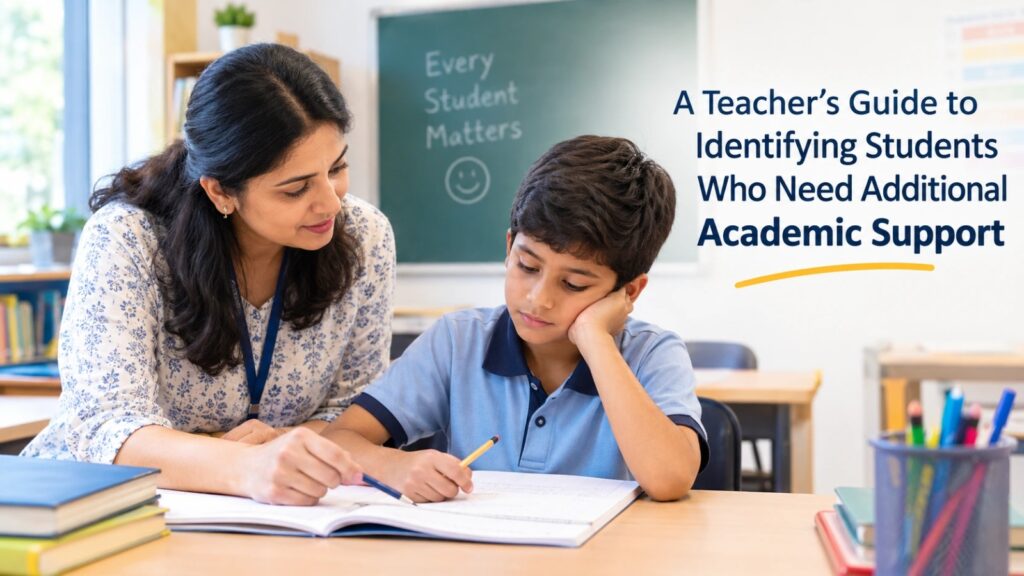
How can teachers identify students who need additional academic support? Teachers can identify students who need academic support by tracking patterns across incomplete assignments, declining test scores, reluctance to participate, and difficulty retaining concepts already taught, then confirming those observations through short formative assessments and one-on-one conversations rather than relying on a single exam result. […]