
Part of our guide to school admissions at Bright Horizon.
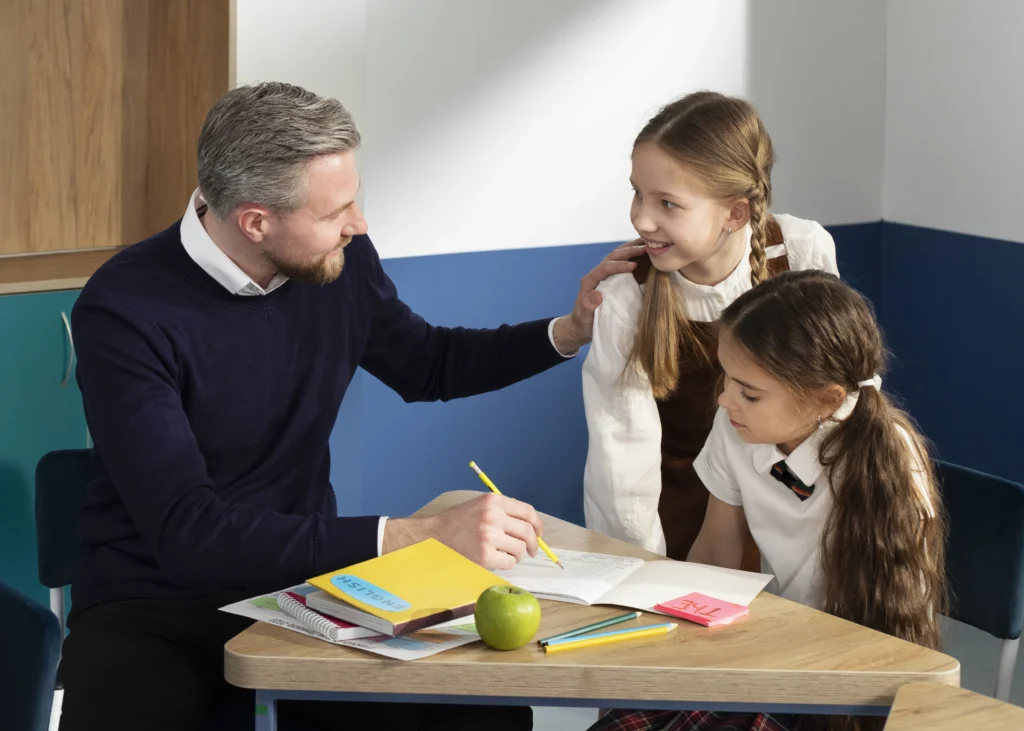
A child’s first weeks at a new school shape their attitude toward learning for years. In Mangalore, where families frequently move from Udupi, Mysuru, and other parts of coastal Karnataka for work, school transitions are a routine challenge.
The good news is that parental involvement and the right school environment together reduce adjustment time substantially. This article provides a practical, evidence-informed framework for parents supporting a child through a school change — whether switching schools in Mangalore locally or relocating from another district.
Why Adjusting to a New School Is Harder Than It Looks
New school environment adjustment is not simply about academics — it involves simultaneously rebuilding a social network, adapting to an unfamiliar physical space, learning a new teacher’s expectations, and managing the emotional weight of leaving behind familiar classmates. For children between 8 and 14, peer relationships are the primary source of daily emotional security. Losing that network overnight — even temporarily — produces stress responses comparable to other significant life changes.
3 Layers of Adjustment Every Child Navigates
- Social layer: Building a peer group from scratch. Research published in the Journal of School Psychology (2019) shows that children without at least one close friend at school after 4 weeks are significantly more likely to report academic disengagement.
- Academic layer: Adapting to a different teacher’s pace, expectations, and classroom culture. CBSE-to-CBSE transitions are typically smoother than state board-to-CBSE ones, because the curriculum framework is consistent.
- Environmental layer: For students enrolling in residential schools in Mangalore, the environmental shift is total — living space, mealtimes, sleep schedule, and daily freedom all change simultaneously. This layer takes the longest to normalise.
Recognising where your child is in the adjustment process helps parents respond appropriately rather than either over-intervening or dismissing real distress:
| Signs a Child Is Struggling | Signs a Child Is Adjusting Well |
| Refuses to go to school in the morning | Mentions classmates by name |
| Frequent stomach aches / headaches | Asks questions about tomorrow’s schedule |
| Becomes quiet or withdrawn at home | Brings home drawings or notes from friends |
| Cries or clings before school entry | Talks about a teacher positively |
| Drops in appetite or sleep quality | Voluntarily mentions school events |
| Reports having no friends after 4 weeks | Participates in extracurricular activity |
Most children cross from the left column to the right column within 4–6 weeks if given consistent emotional support and a school environment with active pastoral care.
Top 10 Ways to Help a Child Adjust to a New School
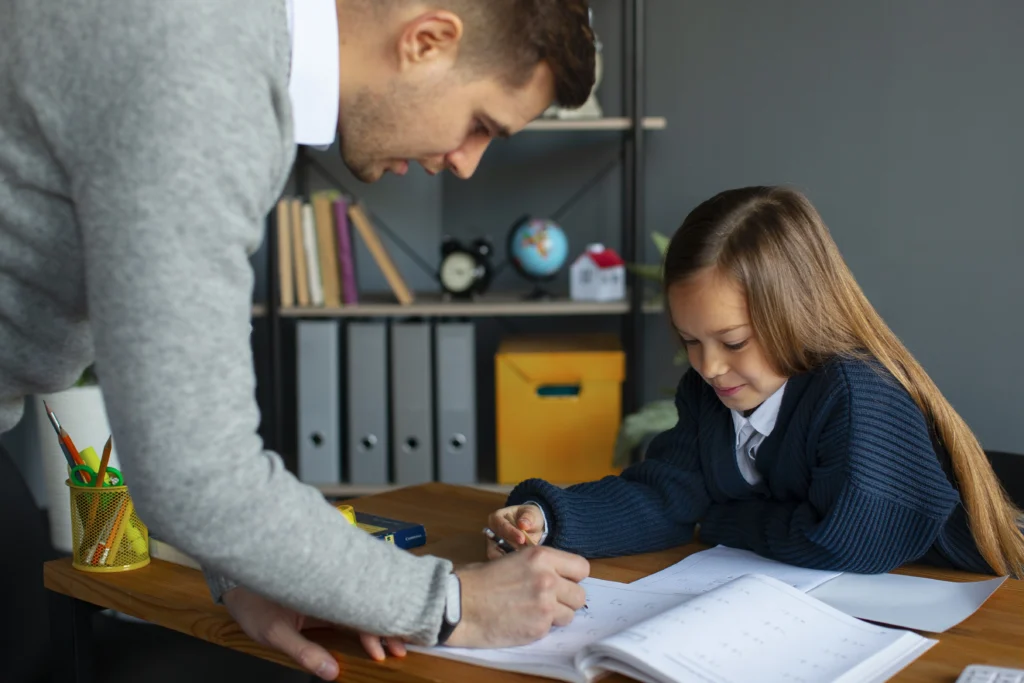
1. Talk About the New School Before the First Day
Anxiety spikes when the unknown is large. Before school starts, talk specifically about what the first morning will look like — where the gate is, who will greet them, what the classroom might feel like. Avoid abstract reassurances like “you’ll be fine.” Concrete descriptions reduce the uncertainty that drives anticipatory anxiety.
| 💡 Parent script Try: ‘On Monday, a teacher named Mrs Anitha will take you to Class 5B. Your classroom is on the ground floor near the library. At 10 AM you’ll have a break where you can sit wherever you like.’ Specific detail beats vague encouragement every time. |
2. Visit the School Before Admission Day
Most top schools in Mangalore allow a pre-admission campus visit. Use this to walk the route from the gate to the classroom, locate the water point and restroom, and meet the class teacher. For residential students, seeing the dormitory before move-in day reduces first-night disorientation significantly. Familiarity with the physical space removes one layer of the adjustment burden on day one.
3. Establish a Daily Routine Before School Opens
Back to school tips for parents consistently prioritise routine — and for good reason. A consistent sleep-wake cycle, fixed meal times, and a predictable morning sequence starting 10–14 days before school opens allows the body’s circadian rhythm to adjust in advance. Children who arrive at school on day one already habituated to the new wake time perform noticeably better on social interaction tasks than those whose routines shifted abruptly.
4. Encourage One Friendship Before Worrying About Groups
Parents often push children to ‘make lots of friends.’ Help your child identify one classmate to invite for a project or sit with at lunch — breadth of social network matters far less than depth at this stage.
5. Maintain Regular Communication for Residential Students
Hostel life for students in Mangalore requires a communication strategy rather than unlimited contact. Fixed video or phone call windows — typically Sunday evenings in most CBSE residential schools — are more stabilising than frequent unscheduled calls. Unscheduled calls tend to disrupt the child’s peer bonding routines and increase homesickness. Use call time to ask specific questions: ‘What did you eat for lunch today?’ ‘Did you play anything at break?’ — not ‘Are you okay?’ which invites the child to inventory their distress.
6. Build a Relationship with the Class Teacher Early
Request a brief 10-minute meeting with the class teacher in the first week — not to express concerns, but to share relevant context about the child: learning style, any prior subject difficulties, extracurricular interests, and friendship patterns. Teachers who know a child’s background can facilitate introductions, seat the child near compatible peers, and watch for early signs of isolation. This single step has a disproportionate impact on adjustment speed.
7. Avoid Comparing the Old School with the New
“In my old school it was different” is a statement that, when reinforced by parents, locks a child in comparison mode and prevents them from building new attachments. Acknowledge that the old school was good without positioning the new school as inferior. The implicit message that the transition was a loss — rather than a change — extends adjustment time and creates unnecessary loyalty conflicts.
8. Celebrate Small Adjustment Milestones
The first time a child mentions a classmate’s name at dinner, completes homework without prompting in the new school’s format, or participates in a school activity is a milestone worth acknowledging. Positive reinforcement of adjustment behaviours — not academic performance — builds the intrinsic motivation to invest in the new environment. Avoid tying praise to grades during the first month.
9. Keep Emotional Support Consistent and Predictable
First day of school anxiety tips often focus on the drop-off moment — but adjustment is a weeks-long process, not a one-day event. The drop in visible distress on days 2–5 often reflects suppression rather than resolution. Keep the same emotional availability in week three as in week one. Create a brief daily check-in ritual — even two minutes at bedtime — where the child can report something from school without being evaluated.
10. Choose a School With an Active Transition Support Programme
School transition tips for parents extend beyond home. The most effective variable in adjustment is the school’s own systems — orientation programmes for new students, buddy systems pairing new students with seniors, counsellor availability in the first week, and teacher training in identifying social isolation. When evaluating the best school in Mangalore for your child, ask specifically: ‘What does your school do for new students in the first month?’
Role of School Selection in a Smooth Transition
A child’s adjustment is significantly shaped by the school’s own infrastructure for managing it. Choosing poorly — a school with high teacher turnover, no counsellor, or an inconsistent hostel environment — makes every strategy above harder to execute.
| Factor | Day School | CBSE Residential School |
| Routine structure | Parent-managed mornings/evenings | Fully structured school timetable |
| Social development | Limited to school hours | 24-hour peer interaction & bonding |
| Academic support | Private tuition often needed | Evening study halls, teacher access |
| Life skills | Home-based learning | Housekeeping, time management, independence |
| Parental oversight | Daily — high involvement required | Structured communication schedule |
| Adjustment timeline | 1–3 weeks typically | 4–8 weeks; deeper long-term bonds |
| Best fit | Local families, city-based child | Outstation families, holistic development focus |
For families choosing between day and residential options among top schools in Mangalore, the decision should hinge on the child’s temperament and the family’s geographic situation — not on a general preference. Children with strong introverted tendencies sometimes thrive in residential settings because peer contact is structured and unavoidable, reducing the social initiative barrier.
Why CBSE Structure Helps New Students Adjust
CBSE residential school near Mangalore options appeal to parents partly because the CBSE board’s national curriculum framework provides continuity. A child moving from a CBSE school in Bengaluru to a CBSE school in Mangalore carries their academic context with them — the same textbook publishers (NCERT), similar assessment patterns, and a nationally consistent grading format.
4 Structural Advantages of CBSE for Transitioning Students
- Curriculum continuity: NCERT textbooks are standard across all CBSE-affiliated schools, removing one layer of academic adjustment for mid-year transfers.
- Assessment familiarity: CCE (Continuous and Comprehensive Evaluation) format — used across CBSE schools — means students recognise the test-and-project structure immediately.
- Disciplinary framework: CBSE’s school regulations mandate counsellor availability, anti-bullying policies, and student welfare committees — structures that directly support new students.
- Life skills integration: CBSE’s revised framework (2022–23 onwards) mandates life skills and SEL (Social Emotional Learning) components in the curriculum, which supports peer bonding and emotional resilience in transitioning students.
How Mangalore Schools Support New Students
Among the better-regarded schools in Dakshina Kannada, new student support typically includes the following — but quality and consistency vary widely:
Orientation and Buddy Systems
Structured orientation programmes — typically 1–3 days before the academic session begins — walk new students through the campus, introduce them to teachers, and pair them with a senior student buddy. Schools that run these programmes consistently show shorter average adjustment timelines.
Hostel Pastoral Care
Mangalore residential school environments with dedicated houseparents — staff who live in or adjacent to the hostel and manage the residential students’ daily welfare — provide a non-academic adult relationship that supports homesick students. The houseparent role is distinct from the class teacher: their job is emotional and logistical, not academic.
Counselling Support
CBSE’s 2023 circular to affiliated schools mandated trained counsellors at the secondary and senior secondary level. Schools that extend counselling support to primary classes — and make it accessible to new students in the first week — show measurably lower incidences of prolonged adjustment difficulty.
Teacher Mentorship
Class teachers who proactively monitor seating dynamics, assign classroom responsibilities (board monitor, attendance monitor) to new students in the first week, and check in individually with new students during break time convert institutional goodwill into personalised support.
How to Choose the Best School in Mangalore
A campus visit with a specific checklist produces better decisions than brochure comparisons. Ask the following during any school visit:
- CBSE affiliation verification:
- Ask for the school’s CBSE affiliation number and verify it on cbse.gov.in. Unaffiliated schools occasionally misrepresent their board status.
- Faculty stability:
- What is the average teacher tenure? High annual turnover (>25% per year) signals institutional instability that directly affects the consistency children need.
- Counsellor availability:
- Is a trained school counsellor available full-time or part-time? At what student-to-counsellor ratio?
- Residential infrastructure:
- For residential school enquiries — visit the dormitory, dining hall, and sick bay. Ask about the houseparent-to-student ratio (ideally 1:20 or better).
- Parent communication system:
- How are parents informed of academic and welfare concerns? Is there a structured app, portal, or scheduled call system?
- New student support:
- Ask specifically: ‘What does your school do for students who join mid-year or from another city?’ The specificity of the answer reveals the quality of the programme.
Bright Horizon International School, located in Dakshina Kannada, offers a CBSE-affiliated curriculum with dedicated residential care. For parents evaluating CBSE schools in Mangalore, details on residential facilities, admission process, and academic programmes are available at brighthorizoneducationfoundation.com.
What Parents Can Do Right Now: A 5-Step Action Plan
If admission is already confirmed or the first day is within three weeks, prioritise these five steps:
- Schedule a campus visit — even a brief one — before the first school morning.
- Start the school sleep schedule 10 days before school opens, not the night before.
- Email the class teacher a one-paragraph introduction to your child: learning style, interests, any prior subject challenges.
- Identify one family in the new class through the school’s parent group and arrange a casual meeting before school opens.
- Agree with your child on a daily check-in routine — two minutes at bedtime — that continues for at least six weeks.
The adjustment window is real, but it is finite. Most children who receive consistent parental support and attend a school with structured transition care settle fully within 6–8 weeks. The work done in the first month determines the quality of the next several years.
Frequently Asked Questions
How long does it take for a child to adjust to a new school?
Most children take 4–8 weeks to feel fully settled. Day school students typically adjust within 3–4 weeks once friendships form and routines stabilise. Residential school students may take 6–8 weeks, but tend to develop stronger long-term peer bonds due to shared daily living. Parental support and teacher engagement are the strongest predictors of a shorter adjustment window.
What are the signs that a child is struggling to adjust to a new school?
Watch for recurring stomach aches or headaches on school mornings, refusal to attend, withdrawal at home, drops in appetite or sleep quality, and reporting no friends after 3–4 weeks. If these signs persist past 6 weeks, request a meeting with the class teacher or school counsellor rather than waiting for the school to initiate contact.
Is a CBSE residential school in Mangalore a good choice for children who are relocating?
Yes, particularly for children from outstation families. CBSE curriculum continuity removes the academic adjustment burden, and the residential environment accelerates social bonding through constant peer contact and a structured daily routine. The key variable is the quality of pastoral care — visit the hostel and ask about houseparent ratios before deciding.
How can parents support a child in a residential school in Mangalore?
Use fixed communication windows rather than spontaneous calls — unscheduled contact can disrupt bonding routines and extend homesickness. Ask specific, forward-looking questions during calls (‘Who sat next to you at lunch?’). Send care packages with familiar items from home. Visit during the school’s scheduled parent days, and focus those visits on meeting the child’s friends and teachers.
What should parents look for when choosing the best school in Mangalore?
Verify CBSE affiliation on cbse.gov.in, check faculty tenure (low turnover matters), ask about counsellor availability and student-to-counsellor ratio, inspect residential facilities in person, and ask specifically what the school does for new students in their first month. Schools that answer that last question with concrete programmes — not generic reassurances — are the ones worth choosing.
| Considering admission to a CBSE school in Mangalore? Bright Horizon International School offers a structured CBSE curriculum, strong pastoral support, and dedicated residential care — designed to help every child settle in with confidence. Visit brighthorizoneducationfoundation.com to schedule a campus visit or enquire about admissions. |