
Part of our guide to student life and activities at Bright Horizon.
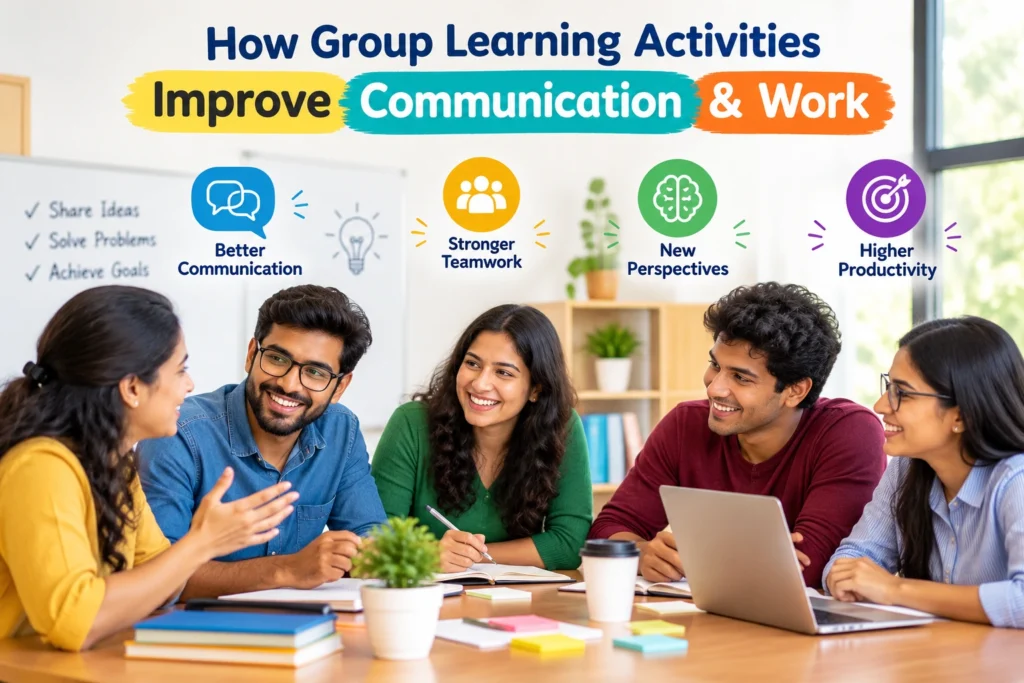
Group learning activities improve communication by giving students regular, low-stakes practice at expressing ideas, listening to others, and asking questions in front of peers, and they build teamwork by requiring students to divide responsibilities, respect different viewpoints, and work toward a shared outcome together. Projects, discussions, debates and problem-solving tasks all do this in different ways, and the skills carry over well beyond the classroom into how students eventually work with others as adults.
A student can memorise an entire textbook chapter and still struggle to explain it clearly to a classmate, defend an idea in a discussion, or divide a task fairly with three other people. These aren’t academic skills in the traditional sense, but they matter just as much, and group learning activities are where students actually get to practise them, not as an occasional add-on, but as a regular part of how a classroom works.
Group learning, sometimes called collaborative learning, simply means students working together toward a shared task or outcome, rather than each working through material alone. A teacher sets the structure, the task, the groupings, the objective, but the learning itself happens through genuine interaction between students: explaining, listening, disagreeing, negotiating, and eventually arriving at something together that none of them would have produced entirely alone. Well-designed group learning activities for students go beyond simply splitting a task into pieces; real student collaboration means the outcome actually depends on everyone’s contribution. This article looks at how group learning activities build communication and teamwork specifically, what kinds of activities work well, the other skills students pick up along the way, and how teachers can make group learning actually effective rather than just students sitting in a circle.
What Are Group Learning Activities?
Group learning activities are structured tasks where students work together in small teams toward a shared goal, a project, a discussion, a problem to solve, rather than completing the work individually. This is different from simply sitting near other students; the task itself needs to require genuine collaboration for it to count as collaborative learning in any meaningful sense. The teacher’s role shifts here too, less delivering information directly and more setting up the structure, forming groups thoughtfully, defining the task clearly, and stepping in to guide rather than dictate as students work through it themselves.
How Group Learning Improves Communication Skills
Building strong communication skills for students is one of those areas that truly only improves with practice, and group work forces that practice in a way individual assignments simply don’t. A student explaining an idea to teammates has to actually organise their thinking well enough for someone else to follow it, which is a different and harder skill than writing an answer for a teacher who already knows the material. Active listening develops too, since a group only functions if members are actually taking in what others say, not just waiting for their own turn to speak. Asking questions when something isn’t clear, rather than nodding along, becomes a normal part of the process rather than something that feels risky. And expressing a differing opinion respectfully, disagreeing with a group member’s idea without dismissing them personally, is a skill that group work teaches through repeated, low-stakes practice far more effectively than a lecture on “how to communicate” ever could.
How Group Activities Develop Teamwork Skills
Teamwork isn’t really one skill; it’s a cluster of smaller habits that group activities build together. Cooperation comes from students needing each other to actually finish the task, not from being told to “work together” as an instruction. Dividing responsibilities fairly, who researches, who presents, who puts the work together, teaches practical project management well before students would encounter that term formally. Respecting different viewpoints becomes necessary rather than optional, since a group with four identical opinions rarely produces the best version of an idea, and students learn this firsthand when a teammate’s different approach actually improves the outcome. And working toward a shared goal, rather than four separate individual goals happening in proximity, is the whole point: it’s what turns a group of students into a team.
Group Learning Activities Students Can Try at School
The following teamwork activities for students all work well across different subjects and age groups:
- Group projects, researching and presenting a topic together over an extended period
- Science experiments, where roles naturally divide between hypothesis, procedure, observation and conclusion
- Classroom discussions, structured around a specific question or topic
- Debates, which teach both persuasive communication and listening to an opposing view
- Role plays, particularly useful for language, history and social science topics
- Presentations, dividing research and delivery across group members
- Problem-solving challenges, where a group works through a puzzle or scenario together
Other Skills Students Develop Through Collaborative Learning
- Leadership, often emerging naturally when someone needs to help coordinate a group’s effort
- Critical thinking, weighing different approaches a group suggests before settling on one
- Decision-making, particularly when a group needs to choose between truly different valid options
- Confidence, built through repeated practice speaking and contributing in front of peers
- Responsibility, since letting a group down feels different from missing an individual deadline
- Conflict resolution, working through a disagreement constructively rather than avoiding it
How Teachers Can Make Group Learning More Effective
- Form balanced groups deliberately, rather than leaving it to students to self-select every time
- Assign clear responsibilities within each group so accountability doesn’t default to one or two students
- Actively encourage quieter students to participate, rather than letting the same voices dominate every time
- Set clear objectives for what the group actually needs to produce or achieve
- Evaluate individual contributions alongside the group outcome, not only the final product
Why Collaborative Learning Matters in CBSE Education
Communication, teamwork and practical, hands-on learning complement a CBSE curriculum’s academic rigour rather than competing with it for time. A student who can explain a concept clearly to a group, defend a position in a discussion, and contribute meaningfully to a shared project is often better prepared for board exam answer-writing, presentations and practical assessments than one who has only practised solitary study. At a CBSE school in Mangalore that builds collaborative activities into regular classroom practice, clubs like debate and public speaking, group science projects, coding and problem-solving sessions, these skills develop alongside academics rather than as a separate, occasional activity squeezed in around exam preparation.
Frequently Asked Questions About Group Learning
What is the difference between group learning and collaborative learning?
The terms are generally used interchangeably; both describe students working together toward a shared task or outcome, with communication and teamwork developing as a natural part of the process rather than as a separate lesson.
At what age should children start group learning activities?
Simple collaborative activities can start from an early age, with age-appropriate complexity, structured pair work in primary years, more independent group projects as students move into higher classes and can manage responsibility with less direct supervision.
Does group learning benefit shy or introverted students?
Yes, though it works best when teachers actively create space for quieter students to contribute rather than assuming participation will happen naturally. Structured roles within a group often help introverted students engage more comfortably than an open, unstructured discussion would.
How does group learning help with exam preparation?
Explaining concepts to others and defending a position in discussion both strengthen genuine understanding of a topic, which tends to translate into clearer, more confident answer-writing, alongside the communication skills useful in oral or practical assessments.
What role does the teacher play during group activities?
The teacher sets the structure, forms groups thoughtfully, defines clear objectives, and guides the process, stepping in when needed, rather than delivering information directly the way a traditional lecture would.
Conclusion
The benefits of group learning extend well beyond the classroom task itself: students practise expressing ideas, listening actively, dividing responsibility fairly, and working through disagreement toward a shared outcome. Confidence, leadership, critical thinking and conflict resolution tend to develop alongside these two core skills, not as separate lessons but as a natural part of doing the work together. For overall student development, this kind of practical, social learning complements academic education rather than competing with it, preparing students not just for exams, but for the group projects, team environments and collaborative decision-making they’ll encounter well beyond school.
Looking for a school where collaborative learning is part of everyday classroom practice, not an occasional activity? Explore Bright Horizon International School.